By Paul Effiong
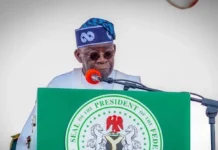
Speaker of the House of Representatives, Tajudeen Abbas has declared that Nigeria is entering a decisive phase of economic consolidation, as President Bola Tinubu formally presented the 2026 Appropriation Bill to a joint sitting of the National Assembly, yesterday.
Speaker Abbas, who stated this during his closing remarks, commended President Tinubu for personally honouring the lawmakers with his presence.
According to the speaker, the 2026 budget presentation and the president’s gesture reaffirmed legislative confidence in democratic institutions, as well as underscored the president’s belief that sustainable national renewal is achievable through partnership between the executive and legislature.
While reflecting on the outgoing year, the speaker said 2025 marked a period of regained stability, renewed confidence and steady progress, following difficult adjustments occasioned by global economic headwinds and domestic reforms.
He noted that while the economy endured volatility, particularly in oil prices and exchange rate assumptions, Nigeria had emerged more resilient and better positioned for growth.
Speaker Abbas equally maintained that the fiscal challenges of 2025, including fluctuations in crude oil prices and external shocks exposed the risks of over-optimistic budget assumptions and reinforced the urgency of realism, discipline and diversification in revenue planning.
The speaker also informed that Nigeria recorded positive economic growth throughout 2025, with real GDP growth approaching four percent, placing the country among the stronger-performing large economies in Sub-Saharan Africa.
Abbas also emphasized that easing inflationary pressures improved agricultural output and more stable supply chains had helped moderate food and headline inflation across the country in the outgoing year.
He noted that external indicators had strengthened, citing improved foreign exchange reserves, resilient remittance inflows, rising export receipts and greater coherence in the foreign exchange market.
He said international institutions, including the World Bank and the International Monetary Fund, IMF, had acknowledged these developments as evidence of restored macroeconomic credibility.
Looking ahead, he stressed that the central task for 2026 is to consolidate reforms and ensure that growth translates into jobs, higher incomes and expanded opportunities for Nigerians. He said fiscal discipline must deliver visible impact, fairness and efficiency, with budgets grounded in credible targets and realistic assumptions.
He praised President Tinubu’s insistence on operating “one budget and one fiscal framework,” describing it as a critical signal of reform maturity. The speaker said the rejection of parallel budgets and fragmented fiscal authorities would restore order to public finance and ensure that every naira appropriated by the National Assembly aligns with national priorities.
On security, Abbas described it as the foundation of development, linking it to improved safety to food production, price stability, investment confidence and social cohesion. He said the administration’s emergency posture on security, backed by increased recruitment, improved welfare, enhanced intelligence and territorial security, was rightly prioritised in the 2026 budget.
The speaker also highlighted the significance of the new tax laws coming into effect in 2026, stressing that they would broaden the tax base, as well as enhance equity, reduce leakages and strengthen non-oil revenues.
He assured Nigerians that the National Assembly would consider the budget with urgency and patriotism, insisting on accountability and value for money.
Conclusively, he thanked the president for his trust in democratic institutions, while hailing the Senate President, Godswill Akpabio for legislative partnership along with other lawmakers.