
…Community health services reel from funding cuts
…As government scrambles to protect treatment, prevention gains
Nigeria’s fragile progress against HIV, tuberculosis and malaria is facing a quiet
but dangerous setback as the suspension of key United States health assistance
begins to strain treatment access and threaten millions of vulnerable lives
nationwide, JULIET IBIMINA writes.
For many Nigerians, the quiet humanitarian emergency unfolding across the
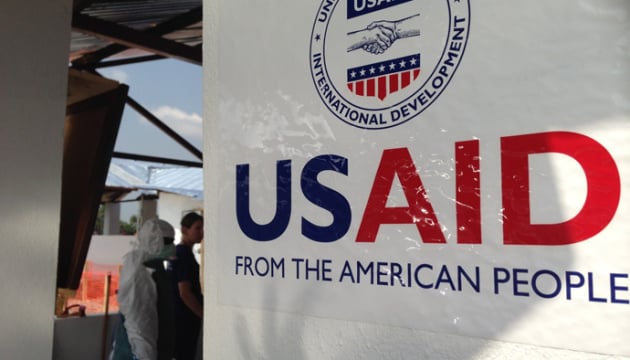
country following the 2025 suspension of key United States foreign assistance
programmes, particularly through the United States Agency for International
Development, USAID, has become a serious dilemma. With more than $1 billion
in annual support affected, the ripple effects are now being felt most sharply by
vulnerable communities battling HIV/AIDS, tuberculosis and malaria.
Nigeria carries the second-largest burden of people living with HIV globally. For
decades, programmes supported through the US President’s Emergency Plan for
AIDS Relief, PEPFAR, helped sustain access to life-saving antiretroviral therapy
across the country.
Although current national stock assessments indicate that facilities still hold about
two months’ supply of treatment packs and central warehouses about five months’
reserves, disruptions in testing services, community outreach and case-finding
activities are already significant. Community-based HIV testing has slowed
drastically, while specialised services at more than 80 One-Stop Shops serving key
populations have been interrupted.
For orphans and vulnerable children living with HIV, the consequences could be
severe if these service disruptions persist. A community health worker attached to
the Catholic Action Committee on AIDS, CACA, expressed heartfelt concern
when she spoke to our reporter:
“Honestly, it has not been easy for patients, caregivers and even the various
organisations committed to this fight against HIV/AIDS since the United States
Government stopped its assistance to Nigeria. However, by the grace of the
Almighty, the commitment of the government and other organisations such as the
Catholic Church means care has not completely stopped for people living with
HIV, PLWHAs. But for us caregivers, the burden of our work has obviously
increased because many organisations can no longer bear the financial cost, so
many of us were laid off.”
CACA, often operating through Parish Action Committees on AIDS, PACA,
focuses on faith-based HIV/AIDS prevention, care and support, aiming to reduce
stigma and provide holistic assistance to people living with HIV.
Equally worrying is the interruption of services delivered by community health
workers, more than 95 per cent of whom initially received “stop-work” orders
following the funding freeze. Although about two-thirds have since been recalled,
the disruption exposed the fragility of service delivery structures heavily dependent
on external financing.
Nowhere are the effects more visible than in malaria-endemic states such as Kebbi.
For years, the United States Presidential Malaria Initiative funded the distribution
of mosquito nets, diagnostic kits and Artemisinin-based Combination Therapy,
ACT, Nigeria’s frontline malaria treatment. Since the aid suspension, supplies have
declined sharply across several primary healthcare facilities.
At the Yabo Town Clinic, supplies of ACT medicines and rapid diagnostic test kits
have fallen dramatically compared with previous years. In some months, facilities
received only a fraction of their usual allocation; in others, test kits were not
supplied at all.
Health workers report that drugs now run out within weeks of delivery, forcing
patients to purchase treatment privately. For low-income households already
struggling with rising living costs, this shift from free treatment to out-of-pocket
spending has become a dangerous barrier to care.
Nigeria records the highest malaria burden globally. With an estimated 68 million
cases annually and malaria contributing about 11 per cent of maternal deaths
nationwide, any disruption in prevention or treatment threatens to reverse years of
progress.
Tuberculosis control programmes have also been affected by the suspension of
external support. Surveillance activities, treatment-tracking systems and outreach
programmes that depended heavily on donor-backed logistics have slowed in
several locations.
In states such as Kebbi, health officials report that the sudden loss of access to
digital data management systems has made drug ordering and patient tracking
more difficult. As one health worker described it, services are now “working
blind”.
The implications are serious. Tuberculosis treatment depends heavily on
uninterrupted follow-up. Any disruption risks treatment failure, drug resistance and
increased transmission.
Yet the consequences extend beyond disease control. Across the North-East,
emergency feeding centres supported through international humanitarian
partnerships have begun reporting shortages of Ready-to-Use Therapeutic Food.
An estimated one million children face the risk of worsening malnutrition if
alternative supplies are not secured quickly.
At Internally Displaced Persons, IDP camps, the impact has been particularly
severe. In Benue State, a primary healthcare facility serving more than 500
displaced persons was forced to close temporarily after funding disruptions. During
that period, residents were left to pay privately for treatment. Even after reopening,
reduced staffing and fewer intervention programmes have lengthened waiting
times and limited access to care.
Such disruptions create dangerous openings in already fragile environments where
poverty, displacement and insecurity intersect.
Public health disruptions in vulnerable regions can quickly translate into broader
stability concerns.
Development experts warn that reductions in humanitarian assistance in conflict-
affected areas risk deepening community grievances and weakening social
resilience. Extremist groups operating in parts of the North-East may exploit
worsening hardship to strengthen recruitment, especially in communities where
government presence is already limited. Thus, what begins as a health-sector
funding gap can evolve into a wider national security concern.
Recognising the urgency of the situation, the Federal Government has taken steps
to mitigate the impact. The Federal Executive Council recently approved N4.8
billion for the procurement of 150,000 HIV treatment packs under the 2024/2025
HIV Programme Alignment initiative.
Authorities are also exploring the establishment of an AIDS Trust Fund, expanding
domestic financing options and working to absorb affected community health
workers into public-sector employment structures. Rivers State has already
recruited 1,000 healthcare workers, including some impacted by the funding
freeze.
Meanwhile, a newly inaugurated national technical working group on AIDS,
tuberculosis and malaria is coordinating crisis-response strategies, supported by
supplementary funding proposals estimated at about $200 million.
Yet these measures, while encouraging, underscore a deeper reality: Nigeria’s
health sector remains heavily dependent on foreign assistance.
The current disruption is therefore both a warning and an opportunity—one that
highlights the urgent need to strengthen domestic financing, improve health-system
resilience and reduce reliance on external partners.