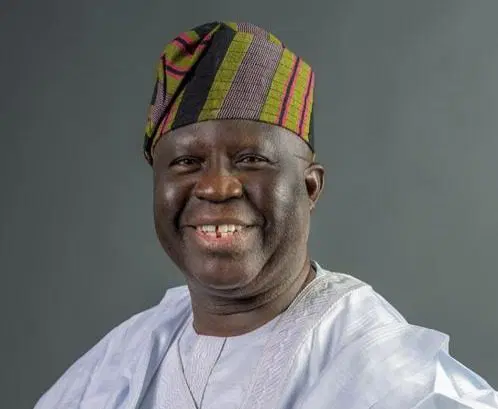
The Senate on Thursday confirmed Professor Abayomi Sunday Fasina of Lagos State as a non-career ambassadorial designate of the Federal Republic of Nigeria, despite objections from some lawmakers and earlier protests by civil society organisations.
The confirmation followed the consideration and adoption of the report of the Senate Committee on Foreign Affairs during plenary.
The committee is chaired by Senator Sani Bello (APC, Niger North), while the report was presented by Senator Simon Lalong (APC, Plateau South).
While presenting the committee’s findings, Lalong urged the Senate to approve the nomination.
“That the Senate do receive and consider the report of the Committee on Foreign Affairs on the confirmation of the nomination of Professor Abayomi Sunday Fasina for appointment as Non-Career Ambassador/High-Commissioner of the Federal Republic of Nigeria.”
Following the presentation, the nomination generated debate on the Senate floor, with some lawmakers expressing reservations while others defended the committee’s recommendation.
One of the committee members, Senator Cyril Fasuyi (APC, Ekiti North), who had signed the report recommending Fasina’s confirmation, later raised objections during plenary.
The committee, however, maintained that allegations previously made against the nominee had already been investigated by the relevant authorities.
In its findings contained under Section 6.0, Item 4, the committee stated:
“that the accusation against Professor Fasina was investigated by competent authorities including the University Governing Council and the Nigeria Police, which both found the allegation false.”
Speaking during the debate, Senate President Godswill Akpabio commended the committee for conducting what he described as a thorough review of the nomination.
He said the committee relied on reports from the Nigeria Police Force, the Department of State Services (DSS) and the university governing council before arriving at its recommendation.
Akpabio cautioned senators against relying on speculation or unverified information while carrying out legislative responsibilities.
He stressed that decisions of the Senate should be guided by verified reports from competent authorities rather than hearsay.
The confirmation comes barely a week after a coalition of civil society organisations staged a protest at the National Assembly, urging senators to reject Fasina’s nomination.
The protesters alleged that the nominee was facing accusations relating to sexual harassment, human rights violations and victimisation, which they said were still before the courts.
According to the coalition, the Senate should have allowed the judicial process to be concluded before considering his nomination for diplomatic appointment.
The group argued that confirming Fasina despite the pending legal matters could damage Nigeria’s international reputation and weaken public confidence in government institutions.
Addressing journalists during the protest, lawyer and activist Amira Adeyemo insisted that the campaign was driven by the need to promote accountability and protect victims of workplace sexual harassment.
“I am here as a concerned Nigerian and a member of civil society, not because I have any personal vendetta against Professor Abayomi Sunday Fasina. This issue is bigger than one individual,” Adeyemo said.
Despite the objections and public protests, the Senate proceeded with the confirmation, paving the way for Fasina’s appointment as a non-career ambassador representing Nigeria abroad.