

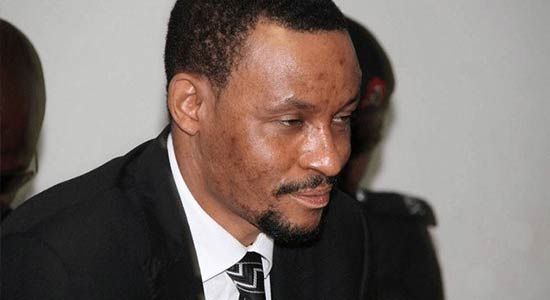
The High Court of the Federal Capital Territory (FCT), sitting in Maitama, Abuja, has granted bail to former Chairman of the Code of Conduct Tribunal (CCT), Mr Danladi Umar, six days after he was remanded in prison custody over alleged corruption.
Justice Peter Kekemeke, who delivered the ruling on Wednesday, admitted the former tribunal chairman to bail in the sum of N100 million with one surety in the same amount.
The court ruled that the surety must own landed property within the Federal Capital Territory and must also depose to an affidavit of means.
In addition, the judge directed Umar to surrender his international passport and prohibited him from travelling outside Nigeria without prior approval from the court.
Following the ruling, Justice Kekemeke adjourned the matter until October 29 for the commencement of trial.
Umar had been remanded at the Kuje Correctional Centre on July 9 after he was arraigned by the Economic and Financial Crimes Commission (EFCC) on a four-count charge bordering on alleged abuse of office and corruption.
According to the anti-graft agency, investigations revealed that the former CCT chairman unlawfully used his official position to obtain financial benefits from contractors engaged by the tribunal.
The EFCC alleged that Umar received kickbacks amounting to approximately N15.5 million through transactions involving his wife’s bank accounts and other indirect payments.
The prosecution claimed that in 2021, Umar instructed that N5.5 million be paid into his wife’s Keystone Bank account by Kurchmives International Limited, a subcontractor involved in painting the headquarters of the Code of Conduct Tribunal in Abuja.
The commission further alleged that on January 25, 2024, another contractor handling the digitisation of the tribunal’s records paid N6 million into his wife’s Zenith Bank account.
The EFCC also accused the former tribunal chairman of directing a contractor to settle his daughter’s tuition fees at Baze University in Abuja to the tune of N2.43 million.
According to the prosecution, the alleged acts constitute offences punishable under Section 19 of the Corrupt Practices and Other Related Offences Act, 2000.
Umar, however, pleaded not guilty to all the charges when he was formally arraigned before the court.
At Wednesday’s proceedings, counsel to the defendant, Mr Sunday Edward, urged the court to grant his client bail pending the determination of the case.
The defence based its application on Section 36(5) of the 1999 Constitution (as amended), as well as Sections 162 and 163 of the Administration of Criminal Justice Act (ACJA), 2015.
Although the prosecution, represented by Mr Christopher Mshelia, opposed the application, arguing that the defendant could influence prospective witnesses, the court rejected the objection.
Justice Kekemeke held that the prosecution failed to establish any likelihood that Umar would interfere with investigations, particularly as the investigation had already been concluded and all documentary evidence had been filed before the court.
The judge also dismissed the prosecution’s argument that the defendant posed a flight risk or was likely to commit further offences, noting that the charges against him were bailable.
The case has revived public attention on Umar’s tenure as chairman of the Code of Conduct Tribunal, particularly his role in the controversial removal of former Chief Justice of Nigeria (CJN), Justice Walter Onnoghen.
On January 23, 2019, Umar issued an ex parte order that paved the way for the suspension of Onnoghen from office.
Two days later, then-President Muhammadu Buhari swore in the next most senior Justice of the Supreme Court, Justice Tanko Muhammad, as Acting Chief Justice of Nigeria.
Although Onnoghen voluntarily resigned on April 4, 2019, Umar proceeded to convict him on April 18, 2019, over allegations that he failed to properly declare his assets.
The tribunal subsequently ordered the forfeiture of funds held in five bank accounts belonging to the former CJN and removed him as Chairman of both the National Judicial Council (NJC) and the Federal Judicial Service Commission (FJSC).
In 2024, the Senate removed Umar from office over allegations of gross misconduct.
President Bola Tinubu later appointed Mr Abdullahi Bello as the new Chairman of the Code of Conduct Tribunal.
Among the charges filed against Umar are allegations that:
“That you, Danladi Yakubu Umar, while serving as the Chairman of the Code of Conduct Tribunal and Chairman of the Code of Conduct Tribunal Tenders Board, on or about the 5th day of October, 2021, in Abuja, within the jurisdiction of this Honourable Court, did confer upon yourself a corrupt and unfair advantage by causing the sum of N5,500,000.00 (five million, five hundred thousand naira only) to be paid to your wife, Zulaihatu Danladi Umar, through her Keystone Bank Account No. 6031167105, by Kurchmives International Limited, a sub-contractor under the contract awarded by the Code of Conduct Tribunal to Momanaf Global Ventures Limited for internal and external painting of the headquarters of the Code of Conduct Tribunal, and thereby committed an offence contrary to Section 19 of the Corrupt Practices and Other Related Offences Act, 2000, and punishable under the same section.”
Another count alleged that:
“That you, Danladi Yakubu Umar, while serving as the Chairman of the Code of Conduct Tribunal and Chairman of the Code of Conduct Tribunal Tenders Board, on or about the 25th day of January, 2024, in Abuja, within the jurisdiction of this Honourable Court, did confer upon yourself a corrupt and unfair advantage by causing the sum of N6,000,000.00 (six million naira only) to be paid to your wife, Zulaihatu Danladi Umar, through her Zenith Bank Account No. 2085458208, by Portal Realities Limited, a sister company of JTF Global Links Limited, a company which was awarded the contract for the digitalisation of the Code of Conduct Tribunal management records by the Code of Conduct Tribunal, and thereby committed an offence contrary to Section 19 of the Corrupt Practices and Other Related Offences Act, 2000, and punishable under the same section.”