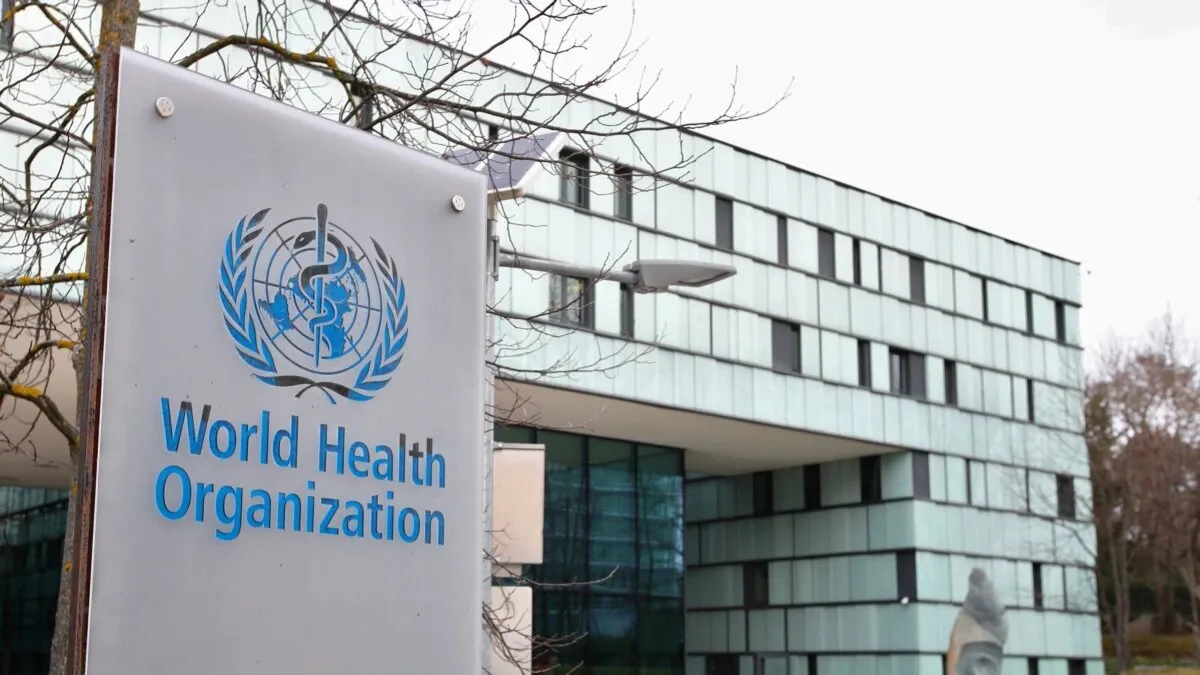
The World Health Organization (WHO) has officially declared the recent Hantavirus outbreak over after confirming that all exposed individuals have completed monitoring without recording any new infections.
The announcement was made on Thursday during an online media briefing by the Director-General of the WHO, Dr. Tedros Ghebreyesus.
According to him, the final person exposed to the virus aboard the cruise ship MV Hondius completed the mandatory quarantine period, tested negative and has safely returned home.
Dr. Ghebreyesus said no additional Hantavirus infections have been reported since May 25, bringing the international public health response to a successful conclusion.
He disclosed that the outbreak recorded a total of 13 confirmed infections, including three deaths.
“Health authorities successfully identified and monitored more than 650 contacts across 33 countries and territories, helping to prevent further transmission through coordinated international surveillance and quarantine measures,” he said.
Despite officially declaring the outbreak over, the WHO stressed that scientific research into the disease would continue.
According to the organisation, it is collaborating with governments and research institutions to improve understanding of Hantavirus transmission, disease progression and outbreak preparedness.
WHO is currently coordinating a multinational research project involving 21 countries to study how the virus develops in infected patients.
The organisation said findings from the study are expected to contribute to the development of improved diagnostic tools, more effective treatments and future vaccines.
While celebrating the successful containment of Hantavirus, the WHO expressed deep concern over the worsening Ebola outbreak in the Democratic Republic of the Congo (DRC).
Dr. Ghebreyesus revealed that the country has been recording an average of 38 new confirmed Ebola cases daily over the past two weeks, indicating sustained community transmission.
As of July 2, the DRC had recorded 1,406 confirmed Ebola cases, including 438 deaths.
He described the outbreak as one of the most difficult public health emergencies currently facing Africa.
According to him, response efforts have expanded considerably, with testing capacity increasing to 10 laboratories located closer to affected communities to speed up diagnosis and public health interventions.
He added that contact tracing has improved significantly, with approximately 80 per cent of identified contacts currently under monitoring.
However, he noted that more contacts still need to be identified for every confirmed case to effectively break transmission chains.
Treatment capacity has also expanded to about 650 beds across 22 health facilities, although nearly all available spaces are already occupied.
The WHO said it is working with partners to establish an additional 300 treatment beds to meet increasing demand.
Dr. Ghebreyesus also announced that the first patient has been enrolled in the PARTNERS clinical trial evaluating the effectiveness of the monoclonal antibody MBP134 and the antiviral drug Remdesivir, administered separately and in combination.
The study is being coordinated by the DRC’s National Institute for Biomedical Research in partnership with the WHO and other international collaborators.
He explained that patients participating in the trial would receive comprehensive medical care and continuous monitoring throughout the study.
The WHO also pledged to make the medicines widely available if they are proven safe and effective.
In another development, the organisation announced the emergency use listing of the first molecular diagnostic test specifically developed to detect the Bundibugyo strain of the Ebola virus, describing it as a major breakthrough in outbreak preparedness and laboratory response.
Despite the progress, Dr. Ghebreyesus warned that insecurity and public mistrust continue to hamper the Ebola response.
He revealed that an Ebola treatment centre in Ituri Province was recently attacked, leaving two people dead, forcing patients to flee and damaging parts of the facility.
He condemned the attack, stressing that violence against health facilities threatens patients, frontline workers and efforts to contain disease outbreaks.
To strengthen coordination of the response, the WHO and the United Nations have appointed Julien Harneis as Senior Ebola Coordinator following a joint endorsement by Dr. Ghebreyesus and the UN Emergency Relief Coordinator, Tom Fletcher.
The WHO Director-General also reported encouraging progress in Uganda, where no new Ebola cases have been reported since June 21.
However, he disclosed that health authorities recently confirmed a case of Marburg virus disease in Kyegegwa District through enhanced Ebola surveillance.
He said all identified contacts are currently under observation and none has developed symptoms.
According to Dr. Ghebreyesus, the simultaneous occurrence of Hantavirus, Ebola and Marburg outbreaks demonstrates the urgent need for stronger international cooperation in responding to global health emergencies.
He noted that WHO member states will resume negotiations next week on the Pathogen Access and Benefit Sharing system under the WHO Pandemic Agreement, expressing optimism that consensus will be reached.
The WHO also expressed concern over the devastating earthquake in Venezuela, where more than 2,300 people have died, over 5,000 have been injured and nearly 16,000 displaced.
The organisation said it has released 1.5 million dollars from its Contingency Fund for Emergencies and deployed more than six metric tonnes of emergency medical supplies, with an additional 28 metric tonnes expected to arrive soon.
Dr. Ghebreyesus further highlighted air pollution as an overlooked global health emergency, saying approximately 6.5 billion people remain exposed to dangerous levels of fine particulate matter (PM2.5).
According to new WHO estimates, air pollution contributes to about 6.7 million premature deaths annually, with the greatest burden falling on low- and middle-income countries, particularly across sub-Saharan and Northern Africa.
He also called for stronger regulation of social media platforms, warning that addictive digital designs, harmful online content, misinformation and excessive data collection pose growing threats to children’s mental health, privacy and overall well-being.