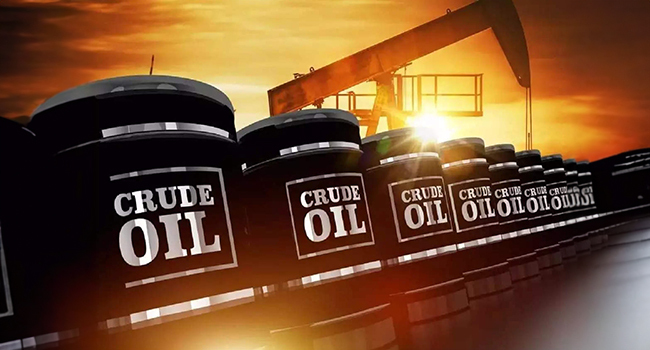
Global oil prices fell to around $72 per barrel on Thursday, their lowest level since the outbreak of the US-Iran conflict in February, as improving supply conditions and renewed confidence in shipping through the Strait of Hormuz eased market concerns.
Brent crude futures for August delivery dropped by $1.06, or 1.44 per cent, to $72.68 per barrel as of 0639 GMT. U.S. West Texas Intermediate (WTI) crude also declined by 76 cents, representing a 1.08 per cent drop, to trade at $69.58 per barrel.
According to Oilprice.com, crude prices have been on a downward trend since the beginning of the week. Oil prices fell from $76.75 per barrel on Tuesday to $73.50 on Wednesday, extending losses on Thursday after surging during the height of the conflict amid fears of disruptions to shipping activities through the strategic Strait of Hormuz.
Analysts attributed the decline to increasing oil supplies from the Middle East and expectations that Iran could boost crude exports following a temporary easing of U.S. sanctions under the recent agreement reached between Washington and Tehran.
The market also responded positively to reports indicating a slight increase in tanker traffic through the Strait of Hormuz, a critical global oil transit route.
An initial agreement reached last week to end the US-Israeli conflict with Iran, which began on February 28, has paved the way for the gradual resumption of maritime activities through the waterway.
The agreement established a 60-day negotiation framework aimed at addressing more complex issues, including Iran’s nuclear programme and long-term regional security concerns.
Energy Secretary Chris Wright reportedly stated that oil exports would continue to flow through the Strait of Hormuz regardless of whether the current agreement survives, adding that Iran would be unable to successfully shut down the route again.
To support the movement of oil tankers, Oman announced the opening of temporary navigation routes on Wednesday to facilitate vessel departures through the Strait. The International Maritime Organization and Omani authorities are said to be coordinating shipping activities in the area.
Market observers noted that traders remain focused on developments in the Middle East, particularly the sustainability of the current agreement and the continued safety of commercial shipping routes.
On Tuesday, U.S. President Donald Trump claimed that a record 19 million barrels of oil passed through the Strait of Hormuz on Monday, describing the development as a major factor behind the recent decline in oil prices.
“19 million barrels of oil flowed out of the Hormuz Strait yesterday, an all-time record. Oil prices are tumbling down, and the world is a much safer place,” Trump wrote on his social media platform.
The latest decline in oil prices is expected to ease pressure on energy markets worldwide and may contribute to lower fuel costs if the current trend continues.