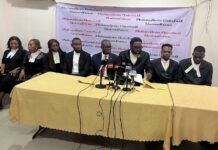


The Indigenous People of Biafra (IPOB) has rejected claims that its leader, Nnamdi Kanu, was suspended or expelled by a faction allegedly led by Chika Edoziem, describing the move as unconstitutional, ineffective, and without legal standing.
In a statement released by the group’s spokesperson, Emma Powerful, IPOB maintained that Edoziem and members of what it described as the dissolved third administration of the Directorate of State (DOS) no longer possess any authority within the organisation and therefore cannot take disciplinary action against Kanu.
The group explained that Kanu, acting under the provisions of IPOB’s Code of Conduct, recently dissolved the third DOS administration headed by Edoziem and subsequently constituted a new leadership structure known as the fourth DOS administration under the chairmanship of Chris Nwaọgụ.
According to IPOB, any declaration, appointment, suspension, or directive issued by Edoziem and his associates after the dissolution of their administration is invalid because they were no longer recognised office holders within the movement at the time such actions were taken.
The organisation argued that authority cannot be exercised from an office that has already been dissolved and that the actions of the former officials have no constitutional backing.
IPOB further stated that its governing laws clearly vest the power to appoint, suspend, dismiss, or dissolve principal officers and administrative structures solely in the office of the Supreme Leader. It stressed that no coordinator, directorate, committee, or collective body has the authority to remove, suspend, or overrule the Supreme Leader.
Quoting provisions of its Code of Conduct, the group said the authority to appoint or remove principal officers belongs exclusively to Kanu and can only be exercised by another individual where such power has been expressly delegated.
Based on this interpretation, IPOB described the purported suspension of Kanu as both invalid and impossible within the framework of the organisation’s laws.
“The authority to appoint, suspend, dismiss or dissolve principal officers and administrative structures resides exclusively in the Office of the Supreme Leader. No Coordinator, Principal Officer, Directorate, Committee or collective body possesses any constitutional authority to suspend, remove or overrule the Supreme Leader,” the statement said.
The organisation characterised the move by the Edoziem-led faction as misguided, unlawful, and inconsistent with the movement’s constitution.
IPOB also accused the former DOS administration of engaging in acts of insubordination, constitutional violations, abuse of office, and attempts to assume powers not granted to them under the organisation’s regulations.
According to the group, instead of accepting their removal and complying with established procedures for transition, members of the dissolved administration chose to challenge the authority from which they originally derived their legitimacy.
The movement directed its members around the world to ignore all communications, directives, appointments, suspensions, and other administrative actions issued by Edoziem and members of the dissolved administration, insisting that such pronouncements have no legal or organisational effect.
“The third administration of the Directorate of State no longer exists. Its tenure has been terminated by lawful authority and its powers extinguished,” the statement added.
IPOB also called on media organisations to verify information concerning the movement and refrain from presenting statements issued by individuals it no longer recognises as authorised representatives.
Reaffirming its loyalty to Kanu, the organisation said the newly established fourth DOS administration remains fully functional and accountable to the detained IPOB leader.
The group warned that any person or faction that continues to challenge Kanu’s authority or undermine the movement’s command structure would be subjected to disciplinary measures, including suspension, removal from office, or expulsion.
It concluded by reiterating that the authority of the Supreme Leader remains supreme and binding on all members of the organisation.