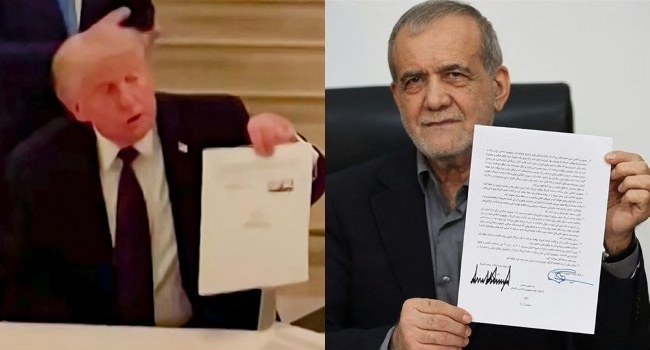
A recently signed agreement aimed at ending the Middle East conflict is already facing significant challenges after planned negotiations in Switzerland were delayed and fresh clashes erupted between Israel and Hezbollah in Lebanon.
The latest developments emerged just days after Iran’s Supreme Leader, Ayatollah Mojtaba Khamenei, revealed that he approved the preliminary peace arrangement despite personal reservations. At the same time, Iran’s chief negotiator cautioned the United States that Tehran would respond firmly to any violation of the agreement.
According to officials from Egypt and Pakistan, mediating countries involved in the process—including Pakistan, Saudi Arabia, and Turkey—are expected to meet in the Egyptian city of Alamein on Sunday to review the implementation of the agreement.
Swiss authorities had earlier prepared to host delegations from Iran and the United States at the luxury Burgenstock resort overlooking Lake Lucerne. The meeting was expected to mark the beginning of discussions on executing the deal signed by U.S. President Donald Trump and Iranian President Masoud Pezeshkian.
However, Iran’s lead negotiator, Mohammad Bagher Ghalibaf, warned that Tehran would not hesitate to react if Washington failed to honor its commitments or attempted to impose additional demands.
“They were once slapped during the war; if they wish to head on that path again, they will get an even harder slap,” he wrote on X.
Switzerland Ready Despite Delay
The agreement was designed to bring an end to the military campaign launched by the United States and Israel against Iran, a conflict that resulted in five weeks of intense fighting before a ceasefire was reached in April. It was also expected to reopen the Strait of Hormuz, a strategic waterway whose closure triggered concerns in global energy markets.
Beyond ending hostilities, the accord established a 60-day framework for broader negotiations covering issues such as Iran’s nuclear activities.
Ghalibaf and U.S. Vice President JD Vance were expected to participate in the opening talks at Burgenstock alongside mediators from Pakistan and Qatar.
However, Switzerland’s foreign ministry announced that the discussions had been postponed.
“The planned talks between the US, Iran, Qatar and Pakistan have been postponed,” the ministry said.
Despite the setback, Swiss officials emphasized that the country remains prepared to facilitate future negotiations and that logistical preparations at the venue are continuing.
The announcement followed a statement from the White House confirming that Vance’s planned trip had been cancelled. A spokesperson explained that arranging such negotiations remains complex and unpredictable.
“We look forward to beginning technical talks as soon as possible,” the spokesperson said.
Fighting Returns to Lebanon
The agreement also sought to halt violence in Lebanon, but tensions resurfaced quickly.
Israel’s military announced new strikes targeting Hezbollah positions on Friday. Lebanese health authorities reported that 18 people were killed in the attacks.
Meanwhile, Israel disclosed that four of its soldiers died in southern Lebanon, marking the first Israeli military fatalities reported since the agreement was signed.
The deaths triggered strong reactions within Israel. National Security Minister Itamar Ben Gvir called for a harsh response, declaring that “all of Lebanon must burn.”
On Thursday, Khamenei explained that while he had reservations about the agreement, he approved it because Iranian officials had assured him that national interests would be protected.
The Iranian leader, who succeeded his father after he was killed during the conflict, accused Trump of using every available pressure tactic to secure the deal.
Strait of Hormuz Reopens Slowly
The U.S. military announced Thursday that it had lifted its naval blockade on Iranian ports, allowing vessels to resume movement to and from the country. However, American naval forces will remain stationed in the region.
Shipping activity through the Strait of Hormuz remains below normal levels despite the agreement.
Iranian state television reported that vessels seeking passage through the strategic waterway must now obtain approval from a newly established government authority responsible for overseeing maritime traffic.
Under the terms of the agreement, the United States agreed to suspend sanctions affecting Iran’s oil industry immediately. The deal also outlines plans for a $300 billion reconstruction fund, supported by regional partners, to be released once a comprehensive settlement on Iran’s nuclear program is finalized.
Criticism at Home
Trump’s decision to end the conflict has generated criticism among some political allies in the United States, particularly after the war claimed the lives of 13 American service members and consumed substantial military resources.
Nevertheless, Trump defended the agreement, arguing that extending military operations would not have achieved meaningful gains.
“The only way I can get tougher is if I go in there for another two or three weeks and continue to bomb the hell out of ’em. Right? But what does that get us? The Strait of Hormuz will not be open,” he told Axios.