Governors under the umbrella of the Nigeria Governors’ Forum (NGF) have once again endorsed the creation of state police, pledging to pursue a framework that is constitutionally grounded, respects citizens’ rights, and aligns with the principles of true federalism.
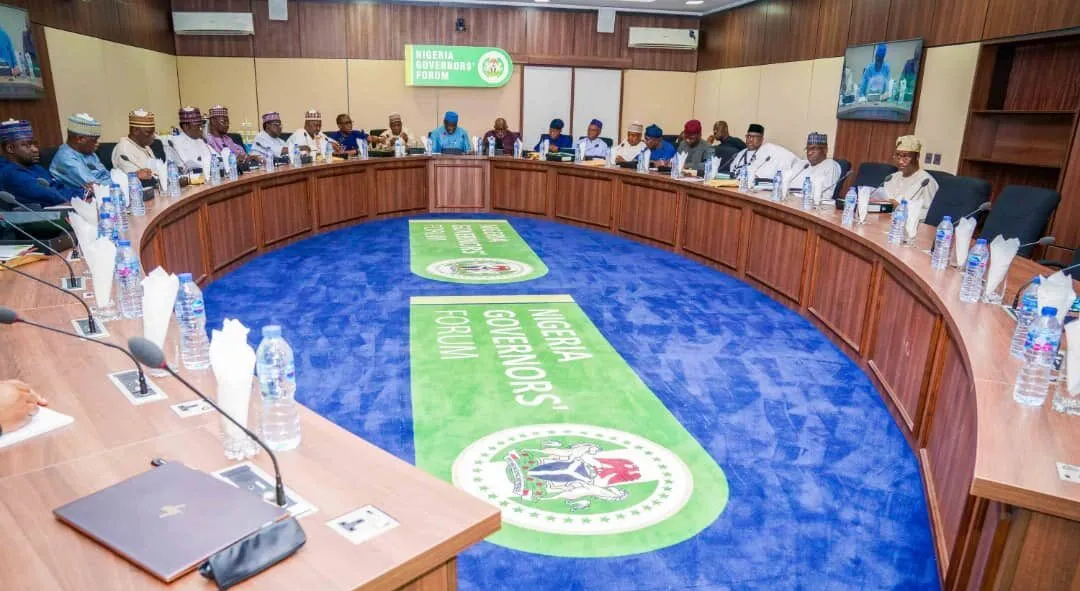
The decision was reached during the Forum’s second meeting held in Abuja, which stretched from Wednesday into the early hours of Thursday. In a communiqué signed by the Chairman of the NGF and Governor of Kwara State, AbdulRahman AbdulRazaq, the governors disclosed that they reviewed presentations from the Forum’s secretariat and a delegation of state attorneys-general on ongoing efforts to establish state policing structures across the country.
According to the communiqué, the governors examined proposed constitutional amendments and legal frameworks designed to support the initiative. They emphasized that any state police arrangement must operate within a solid constitutional framework while protecting fundamental rights and preserving democratic values.
The Forum acknowledged the extensive consultations carried out with state attorneys-general and noted that their recommendations would strengthen the collective position of the states on the issue.
Speaking on the outcome of the meeting, Ogun State Governor Dapo Abiodun explained that the governors deliberated extensively on matters affecting national development and governance.
He stated that the governors had received updates regarding efforts to institutionalize state police and agreed that the proposed framework should be carefully structured to ensure accountability, effectiveness, and compatibility with Nigeria’s federal system.
The renewed endorsement follows an earlier decision by the governors in April, when they supported the development of a state police framework by the NGF Secretariat ahead of anticipated constitutional amendments.
That framework outlines several requirements, including governance arrangements, funding mechanisms, recruitment standards, digital infrastructure, and oversight systems necessary for an effective state policing model.
Beyond security, the governors also considered proposals relating to electricity generation and distribution. The Forum reviewed a presentation on the National Solar Super-Grid (NSSG) Initiative, a project aimed at expanding electricity access through large-scale decentralized solar energy generation linked to a national high-voltage transmission network.
The governors observed that the initiative could accelerate industrial growth, improve energy reliability, strengthen state-level electricity markets, and contribute significantly to economic development.
They reaffirmed their commitment to ongoing reforms in the power sector and pledged continued collaboration with stakeholders to improve access to affordable and dependable electricity across the country.
The Forum also addressed issues relating to nutrition and agriculture. Governors endorsed the National Nutrition 774 (N-774) Initiative and reiterated their commitment to tackling malnutrition and improving nutrition outcomes, particularly among children.
The communiqué noted ongoing efforts to advance the National Nutrition Bill and encouraged sustained engagement with stakeholders to strengthen the legal and institutional framework for nutrition governance.
In addition, the governors received a briefing from the World Bank on its proposed Country Partnership Framework (CPF) for Nigeria covering fiscal years 2026 to 2032.
The presentation also highlighted the proposed Nigeria Sustainable Agricultural Value-Chains for Growth (AGROW) Programme, which seeks to boost agricultural productivity, strengthen value chains, increase private sector participation, improve food security, and support early childhood development.
The governors expressed support for continued collaboration with the Federal Government, the World Bank, and other development partners to ensure successful implementation of the programme and maximize benefits for participating states.
They further approved state-specific interventions and stressed the need for stronger coordination among sectors such as health, education, nutrition, water and sanitation, social protection, and family welfare to achieve sustainable development outcomes.