Joel Ajayi
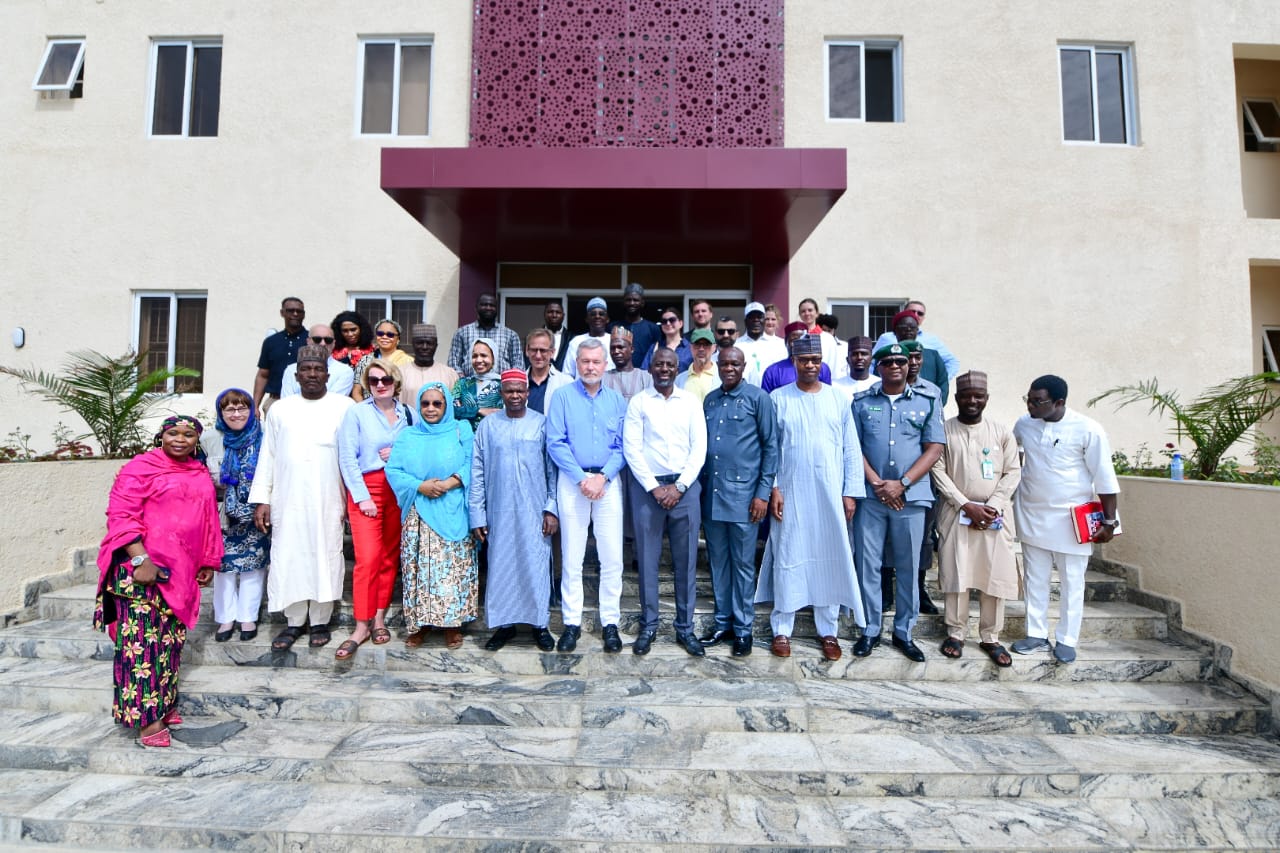
Team Europe delegation led by the European Union Ambassador to Nigeria and ECOWAS, Gautier Mignot visited NutriK’s production facility in Kano. The delegation, which included ambassadors and representatives from EU Member States and UNICEF, toured the company’s facility in the Kano Free Trade Zone as part of a broader mission to review initiatives contributing to nutrition, health, sustainable livelihoods and economic development in northern Nigeria.
NutriK’s is a French – Nigerian company, a subsidiary of the French-based Nutriset Group. NutriK’s is producing Ready-to-Use Therapeutic Food (RUTF), a specialised nutritional product used in the treatment of severe acute malnutrition among children.
NutriK’s is currently relying on imported groundnuts as the processing system of home-grown groundnuts does not meet the quality standards. NutriK’s is working with local producers on improving the raw material processing.
NutriK’s Managing Director Abdoulkader Yonli explained that the company is investing in local processing capacity and expects to begin using Nigeria sourced groundnuts in production within the coming months, reducing dependence on imported inputs.
“Using locally grown groundnuts as well as soya, will significantly reduce costs, let us expand with production and impact the entire value chain, from farming and processing to distribution and employment.”, said Yonli.
He further underscored that NutriK’s is fully dedicated to the fight against malnutrition, from treatment to prevention. “Currently there are two facilities of this kind in Nigeria: in Kano and in Lagos and most of the RUTF products are being sourced abroad. The demand remains much higher than our production capacities.”- added Yonli.
NutriK’s recently relocated to the Kano Free Trade Zone. This expansion was financed by Proparco, the private-sector financing arm of the French Development Agency Group, supporting efforts to strengthen local manufacturing and build resilient nutrition supply chains.
This is also the example of how the Kano Free Trade Zone is attracting investment and supporting industrial development. NutriK’s currently employs 180 people directly, while much more benefit indirectly through suppliers, service providers and agricultural activities linked to production. As local sourcing expands, the number of farmers participating in the value chain is expected to grow.
The products manufactured here are helping to support vulnerable children while demonstrating how investment and innovation as well as business friendly conditions created by the Kano authorities, contribute to human development and economic growth,” underlined the EU Ambassador, Gautier Mignot.
“We came here to learn more about the progress being made, to engage with partners on the ground and to explore how collaboration between Kano, the European Union, UNICEF and the private sector can continue to deliver results,” added Mignot.
According to UNICEF an estimated 2 million children in Nigeria suffer from severe acute malnutrition.