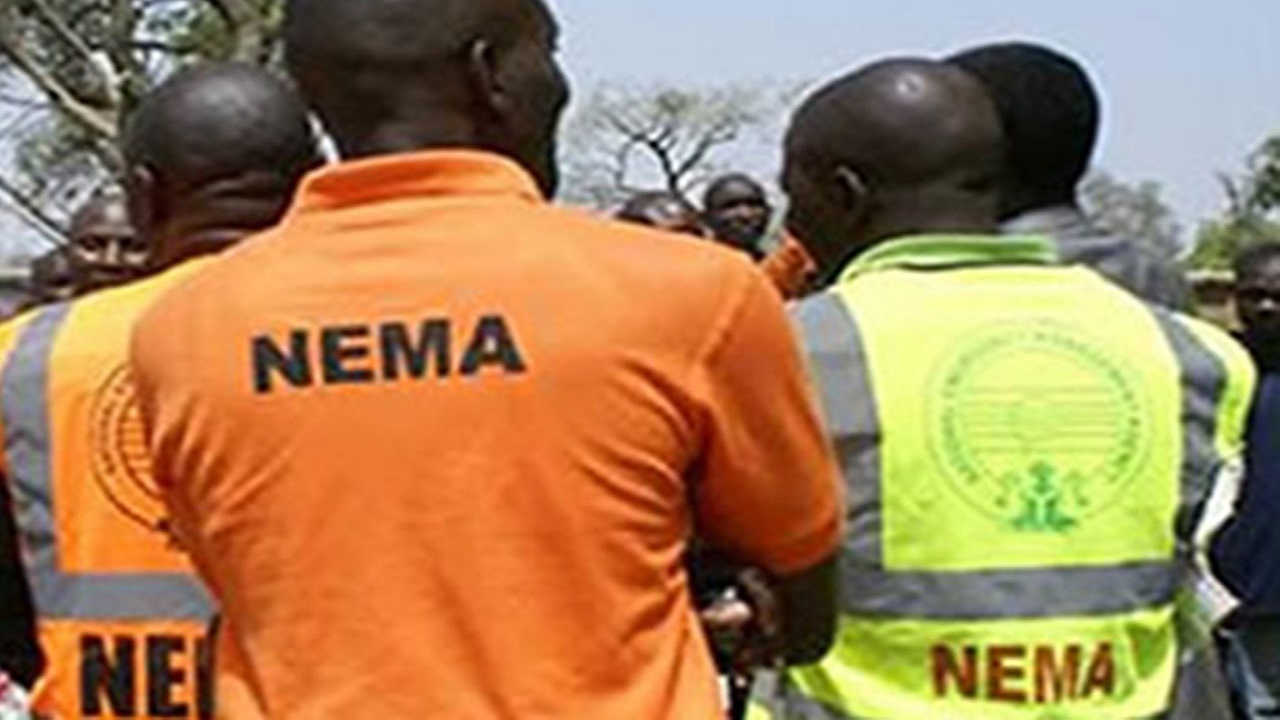
The Sokoto State Emergency Management Agency (SEMA), in collaboration with the National Emergency Management Agency (NEMA), has officially launched the 2026 National Preparedness and Response Campaign on Flood Disaster and Related Hazards, cautioning residents that several parts of the state face heightened flood risks during the ongoing rainy season.
The campaign was unveiled on Tuesday during a stakeholders’ forum focused on flood preparedness and the dissemination of early warning information. The event took place at the Sultan Maccido Institute for Qur’anic and General Studies Auditorium in Sokoto.
Representing the Special Adviser in charge of Sokoto SEMA, Aminu Bodinga, the agency’s Executive Secretary, Prof. Abubakar Junaidu, stressed the need for proactive action to protect lives, livelihoods, and infrastructure from potential flood disasters.
According to him, flooding has repeatedly affected communities across Sokoto State in recent years, causing widespread destruction to homes, agricultural land, roads, and other critical socio-economic assets, while leaving many vulnerable residents struggling to recover.
“Sokoto State has experienced various degrees of flooding in recent years, leading to the destruction of houses, farmlands, roads and other socio-economic assets, thereby affecting the livelihoods of vulnerable members of society,” Junaidu stated.
He explained that predictions issued by the Nigerian Meteorological Agency (NiMet) and the Nigeria Hydrological Services Agency (NIHSA) indicate the possibility of heavy rainfall and flooding in several parts of the country this year, making preparedness efforts more important than ever.
Junaidu emphasised that effective disaster management begins with ensuring that early warning information reaches residents promptly and in a language they can easily understand.
He urged local government councils, traditional institutions, religious leaders, community organisations, and media practitioners to intensify public awareness campaigns aimed at promoting flood prevention and preparedness.
“We must ensure that early warning messages reach communities in a timely and understandable manner. Local government authorities, traditional institutions, religious leaders, community-based organisations and the media all have critical roles to play in intensifying awareness campaigns on flood prevention and preparedness,” he added.
Also speaking at the event, NEMA Director-General, Mrs. Zubaida Umar, represented by the Head of Operations at the NEMA Sokoto Office, Tukur Abubakar, disclosed that 132 local government areas nationwide have been identified as high-risk flood zones, while another 148 LGAs spread across 14 states fall within moderate-risk categories.
She noted that Sokoto State remains one of the areas requiring close monitoring, naming Goronyo, Gudu, Kebbe, Kware, Sabon Birni, Silame, Sokoto North, and Wamakko local government areas as particularly vulnerable to flooding.
“The July-to-September period remains the most critical phase of the rainy season. There is a possibility of overflow from the River Rima, which could threaten riverside communities, farmlands and critical infrastructure,” she warned.
Mrs. Umar revealed that NEMA developed its 2026 Climate-Related Risk Management, Preparedness and Mitigation Framework after analysing seasonal weather forecasts provided by NiMet and NIHSA.
The framework, she explained, is designed to strengthen local emergency response mechanisms through simulation exercises, compliance with flood advisories, strategic stockpiling of relief materials, vulnerability assessments of infrastructure, and the development of evacuation plans for at-risk communities.
She stressed that reducing flood-related disasters requires collective responsibility and should not be left solely in the hands of government agencies.
“Preventing avoidable flood disasters requires a whole-of-society approach. Traditional rulers, religious organisations, women and youth groups, the media and private sector stakeholders must support the dissemination of early warning messages and preparedness measures,” she said.
The stakeholders’ engagement brought together government officials, security agencies, traditional and religious leaders, development partners, civil society organisations, and members of the media to strengthen collaboration and improve disaster preparedness across Sokoto State.
The initiative received support from SAHEL Agriculture and Nutrition Consultant.