By Abdullateef Bambgose
The controversy surrounding the accreditation process for the Medicine and Surgery (MBBS) programme at the Federal University of Health Sciences, Otukpo, FUHSO, has sparked wider discussions about institutional memory, continuity and the allocation of credit within public institutions.
The debate began after the university management issued a statement on 19 May 2026, signed by Mr Sunday A. Igah, explaining the circumstances surrounding student protests over delays in the accreditation process.
In the statement, the management suggested that the institution had inherited significant deficiencies and presented the current administration, led by Vice-Chancellor Prof. Francis Aba Uba, as the leadership that stabilised the programme and positioned it for accreditation.
However, shortly after the statement entered the public domain, a detailed response emerged from the Coalition for Good Governance and Social Justice, led by Comrade Johnson U. Ada, challenging aspects of the university’s account.
At the heart of the disagreement is not whether the current administration has contributed to the accreditation process. Stakeholders generally acknowledge that accreditation requires substantial institutional commitment and that progress made under any administration deserves recognition.
Rather, the contention centres on whether the official statement accurately reflected the institution’s inherited realities and fairly acknowledged the contributions of previous administrations.
According to the coalition, the foundations of FUHSO were laid during the tenure of the pioneer Vice-Chancellor, Prof. Innocent Ujah, who led the institution from its inception until November 2024.
The group recalled that when the university was established in 2019, it reportedly had only a parcel of land designated for its permanent site and a dilapidated youth centre in Otada, Otukpo, which served as its temporary take-off campus.
Despite these limitations, the coalition said academic activities commenced while development simultaneously began at the permanent campus in Akwete-Akpa.
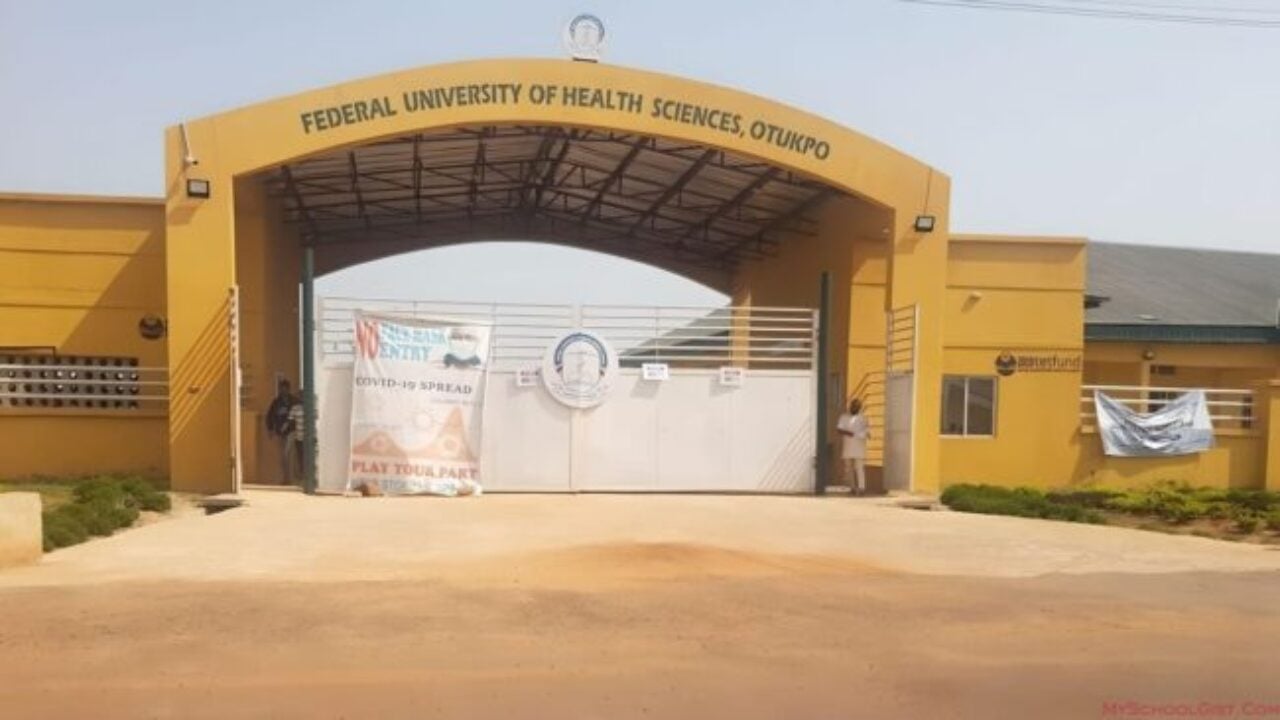
Projects reportedly initiated during that period included the Senate and Administrative Building, the College of Medicine complex, student hostels, official residences for principal officers, access roads, perimeter fencing and the university gate.
According to the rejoinder, these projects formed part of a deliberate strategy to ensure that the institution did not remain indefinitely at its temporary site.
The response also disputed suggestions that little or no engagement with regulatory agencies had taken place before the current administration assumed office.
It maintained that FUHSO underwent resource verification exercises involving the National Universities Commission, NUC, and the Medical and Dental Council of Nigeria, MDCN, before academic activities commenced.
Programmes reportedly approved by the NUC at the time included Medicine and Surgery, Biochemistry, Medical Microbiology, Computer Science, Chemistry, Physics, Biology, Human Anatomy, Human Physiology, Biostatistics and Mathematics.
The coalition further stated that, before the expiration of the pioneer Vice-Chancellor’s tenure, additional resource verification exercises had secured approval for Pharmacy, Nursing and Medical Laboratory Science programmes.
It also claimed that accreditation fees for the MBBS programme had been approved and paid before May 2025, a position which, if independently verified, could shape public understanding of the accreditation timeline.
Another major claim in the response was that FUHSO secured approximately ₦700 million in TETFund intervention funding for laboratory upgrades before the leadership transition. According to the coalition, the funds were intended to support the procurement of laboratory equipment required for academic activities and accreditation purposes.
The response also highlighted advocacy initiatives undertaken by the pioneer administration.
One such intervention reportedly involved engagement with the then Governor of Benue State, Chief Samuel Ortom, which led to the transfer of the General Hospital, Otukpo, to the university to support the clinical training requirements of medical students.
The coalition also referenced the donation of Double KK Hotel to the institution following negotiations with the university leadership, noting that the facility provided additional lecture halls and office space during the university’s formative years.
Stakeholders argued that many of the facilities currently supporting teaching, learning and administration originated from the planning and implementation undertaken during the institution’s early years.
Beyond infrastructure and accreditation, observers say the controversy reflects broader questions about continuity in public institutions.
Universities, like governments, evolve through successive administrations, with projects and accreditation processes often spanning multiple tenures.
While acknowledging the efforts of the current administration in sustaining operations and advancing the accreditation process, some stakeholders have called for greater clarity regarding projects and achievements that can be directly attributed to the present leadership.
They argue that such discussions should not diminish ongoing efforts but should instead provide a more comprehensive account of the institution’s development.
The coalition’s response did not dismiss the progress made under the current administration or oppose the scheduled MDCN accreditation exercise. Rather, it objected to narratives that portray previous administrations as having made little or no contribution.
Observers maintain that official institutional communication should remain balanced and capable of withstanding scrutiny from those familiar with the university’s historical records.
As FUHSO continues its efforts to secure full accreditation for its medical programme, stakeholders say preserving an accurate institutional record is essential not only for due recognition but also for history, accountability and future development.