The United States has announced that it intercepted and destroyed two Iranian drones it said posed a threat to maritime traffic in the Strait of Hormuz, marking another escalation in the ongoing conflict that has now entered its 100th day without a clear resolution.
The latest development comes amid renewed diplomatic efforts aimed at ending hostilities between Iran, the United States, and their regional allies. Pakistan has stepped up mediation efforts, sending a high-level delegation to Tehran with messages intended to encourage dialogue and reduce tensions.
The prolonged conflict has continued to unsettle global financial markets, raise concerns over energy security, and create political pressure for US President Donald Trump as the United States approaches critical midterm elections.
Pakistan’s Interior Minister, Mohsin Naqvi, arrived in Tehran on Saturday carrying what Iranian state television described as a “special letter” from Pakistan’s Chief of Army Staff, Field Marshal Syed Asim Munir, to Iran’s Supreme Leader, Ayatollah Mojtaba Khamenei. Naqvi also conveyed a message from Pakistan’s Prime Minister regarding the evolving regional situation.
Speaking upon arrival, Naqvi described the communication as highly significant, underscoring Pakistan’s growing role in facilitating discussions between Tehran and Washington. Pakistan has previously hosted indirect diplomatic engagements between both countries, including a round of direct negotiations held in Islamabad.
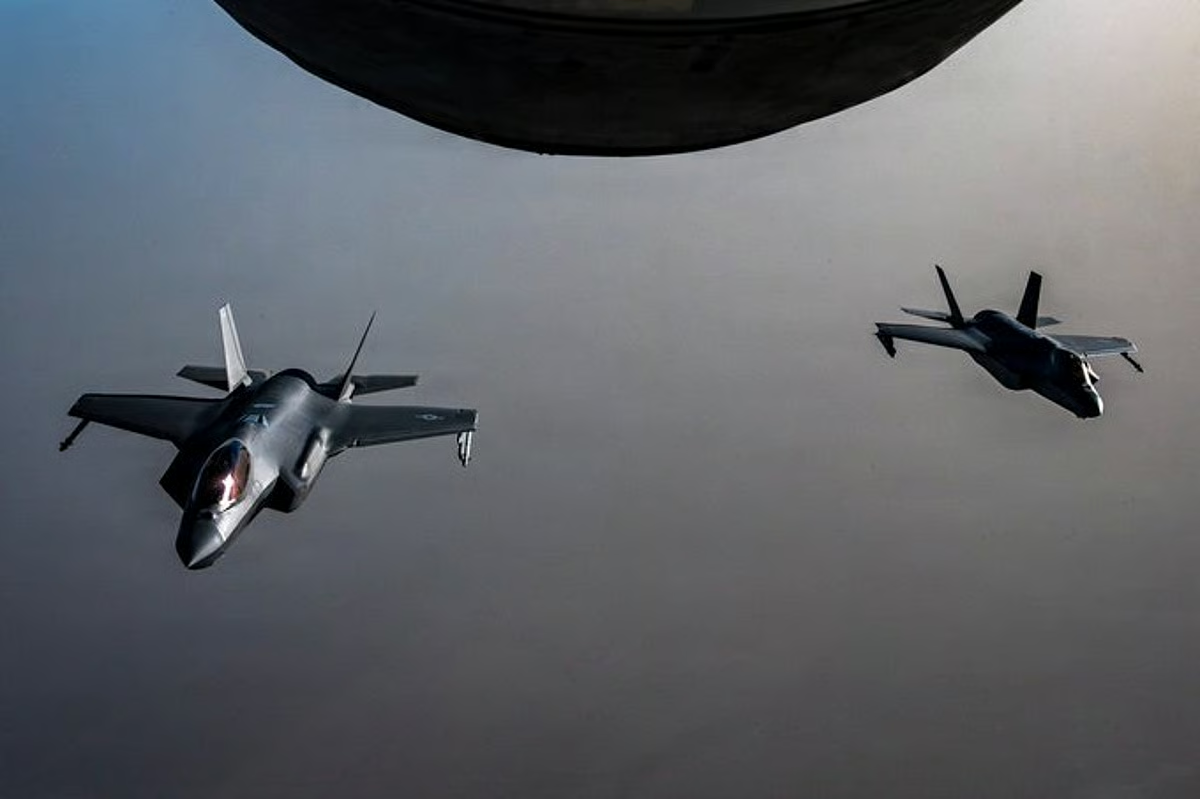
While diplomatic channels remain active, military confrontations have continued. The US Central Command (CENTCOM) disclosed that American forces destroyed two Iranian drones that were allegedly threatening international shipping in the Strait of Hormuz. Earlier, the command had also reported striking four other drones and multiple coastal surveillance radar installations linked to Iranian military operations.
The Strait of Hormuz remains one of the world’s most strategically important waterways, serving as a critical route for global oil exports. Any military activity in the area often raises concerns about energy supplies and international trade.
Tensions intensified further after Iran reportedly launched missiles toward US allies Bahrain and Kuwait on Saturday. The attacks triggered strong condemnation from Gulf nations and increased pressure on the fragile ceasefire agreement reached on April 8.
Iran’s Foreign Ministry strongly criticised the recent US military operations, describing them as blatant violations of international norms and accusing Washington of engaging in hostile and provocative actions that undermine regional stability.
Adding to the uncertainty, Mohsen Rezaei, a senior military adviser to Iran’s supreme leader, stated during an interview with CNN that negotiations between Tehran and Washington had reached an impasse.
According to Rezaei, diplomatic efforts remain stalled and require intervention from President Trump to move forward. He also reiterated Iran’s demand for access to approximately $24 billion in frozen assets, which Tehran considers a key component of any future agreement.
However, reports suggest that the US administration may pursue a different course regarding those assets. Sources familiar with discussions involving Treasury Secretary Scott Bessent indicated that Washington could explore mechanisms to channel Iranian funds toward rebuilding and repairing damage sustained by Gulf allies affected by Iranian military actions.
Meanwhile, diplomatic activity has expanded beyond Iran and the Gulf. Lebanon’s Army Commander, Rodolphe Haykal, departed for Pakistan to participate in discussions focused on regional security and efforts to prevent further escalation involving Hezbollah and Israel.
Lebanon became increasingly entangled in the broader conflict after Hezbollah launched attacks against Israel on March 2. Since then, Iran has consistently argued that developments in Lebanon are closely tied to the wider confrontation involving Tehran and Washington.
Violence in Lebanon also continued over the weekend. Lebanese authorities reported that an Israeli strike in southern Lebanon killed three Lebanese soldiers. Israel’s military stated that it was reviewing the incident while maintaining that its operations are directed at Hezbollah positions rather than Lebanese government forces.
Lebanon’s Health Ministry additionally reported that an Israeli strike on the town of Saksakiyeh resulted in the deaths of two women and left 22 people injured.
On the Israeli side, military officials confirmed the deaths of two soldiers during ongoing operations.
Although a ceasefire announced in April significantly reduced direct hostilities, clashes have persisted in Lebanon. A newly proposed conditional truce introduced this week was rejected by Hezbollah, further complicating peace efforts.
In another sign of continuing instability, Israel’s military announced on Sunday that it successfully intercepted two projectiles launched from Lebanese territory into Israel.
As diplomatic initiatives continue alongside military engagements, the conflict remains far from resolved, with both sides maintaining hardline positions despite mounting international calls for a sustainable peace agreement.