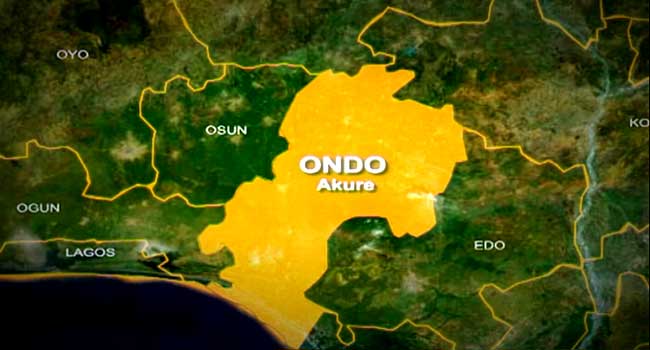
Ondo State governor, Lucky Aiyedatiwa said his administration has intensified efforts to combat deforestation and reposition the state’s cocoa sector in line with emerging international standards.
The international standards, he said, will be on sustainable agricultural production and global market compliance.
Aiyedatiwa said this yesterday in Akure at the opening of the second Food and Agriculture Organisation, FAO, workshop.
The event was organised by FAO of the United Nations under the Food Systems, Land Use and Restoration (GEF-7 FOLUR-IP) Nigeria Project.
Aiyedatiwa said government had inaugurated the State Strategic Committee on European Union Deforestation-Free Regulation, EUDR, compliance.
He said this would align Ondo’s cocoa industry with global standards on deforestation-free cocoa production, agroforestry and restoration of degraded forests.
Aiyedatiwa noted that the FAO had continued to contribute significantly to sustainable agricultural practices and environmental protection in the state.
He said the project is being implemented in eight local government areas comprising; Akure South, Idanre, Ondo West, Ile-Oluji/Okeigbo, Owo, Odigbo, Okitipupa and Irele.
The governor added that about 14,000 smallholder cocoa and oil palm farmers had already been profiled under the pilot phase of the programme.
He commended FAO for supporting efforts aimed at transforming cocoa and oil palm production systems in the Niger Delta towards sustainability and resilience.
Aiyedatiwa also acknowledged the supply of Geographic Information System, GIS, equipment to the state for the establishment of a laboratory.
He underscored the need for stakeholders to embrace integrated landscape management and sustainable food systems capable of ensuring food security and improved livelihoods for farmers.
Aiyedatiwa assured that the state government would increase its co-financing support for the FAO project to ensure improved performance and successful implementation.
“Let me add that the upgrading of the nursery garden of the Forestry Unit sited in Aponmu, Akure South Local Government Area is presently ongoing; with a borehole already constructed, raising of agroforestry seedlings and other upgrading facilities being put in place.
“We have no doubt that these activities will have a positive impact on the agricultural sector for improvement in food production and security systems in our Sunshine State,” he said.
Earlier, FAO’s National Coordinator in Nigeria, Dr Nifesimi Ogunkua urged greater collaboration to boost sustainable land use, agroforestry and international market access for Ondo’s cocoa and oil palm farmers.
Ogunkua said FAO remains responsible for the technical quality and overall delivery of the project, while working with national institutions to ensure sustainable impact.
She said the Forestry Research Institute of Nigeria is the executive partner, working through the National Project Management Unit and State Implementation Unit under the global programme active in Africa, Asia and Latin America.
Earlier, the Commissioner for Agriculture and Forestry, Mr Leye Akinola said the workshop focused on integrated landscape management, land use planning, governance frameworks and agroecological transition pathways.
Akinola said the workshop was designed to strengthen stakeholders alignment, enhance institutional collaboration and identify practical measures to support sustainable land use and agricultural food systems.
Also speaking, Chairman of the Association of Local Governments of Nigeria in Ondo State, Mr Gbenga Fasua assured that the eight benefiting local governments would support and sustain the project. (NAN)