By Paul Effiong, Abuja
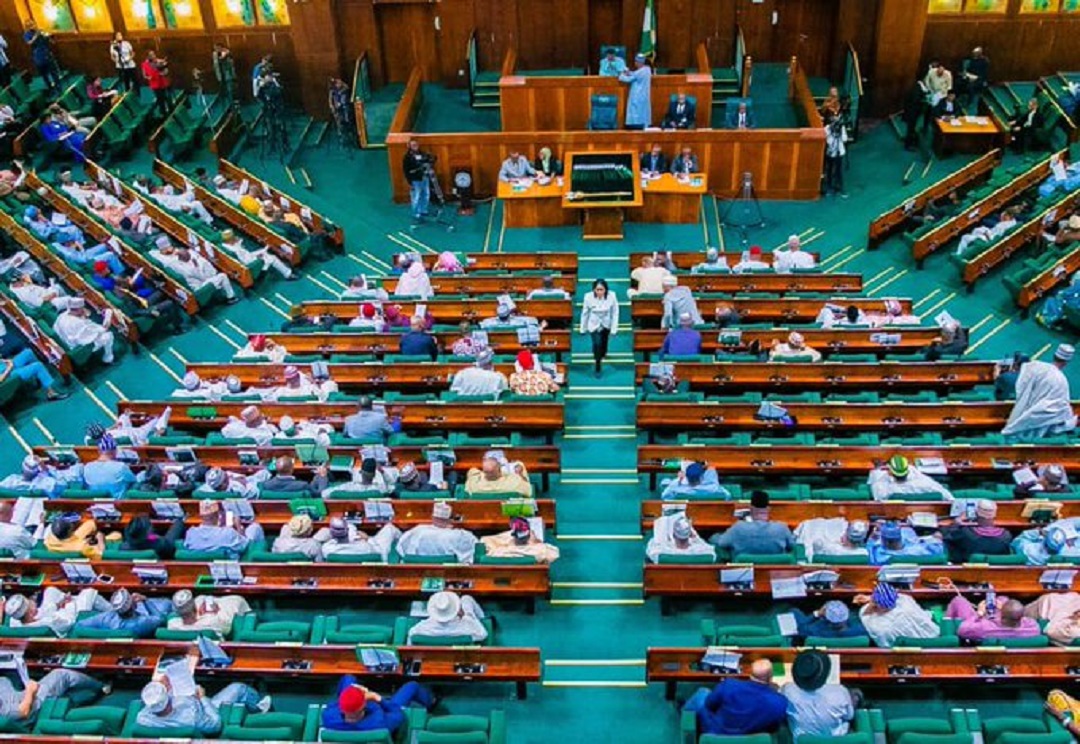
In a bid to ensure sanity in the political system, the House of Representatives yesterday made a bold step to tighten Nigeria’s political regulations by advancing a bill that seeks to prohibit dual party membership.
The expected legislation titled ‘A Bill for an Act to Amend the Electoral Act, 2026, to Make Express Prohibition of Dual Party Membership and Provide Penalties for Contravention and for Related Matters (HB.2728),’ scaled through second reading on the floor of the chamber before it was considered clause-by-clause by the Committee of the Whole and was subsequently passed.
Lawmakers said the amendment targeted Section 77 of the recently signed Electoral Act 2026 by introducing new subsections (8)–(10) which is aimed at expressly outlawing the practice of belonging to more than one political party simultaneously.
Citing the provision that states that “A person shall not be registered as a member of more than one political party at the same time,” the legislation says where it is discovered that an individual holds membership of multiple parties, such dual membership will be rendered null and void, and invalid.
Under the proposed amendment, anyone found to be registered in more than one political party at the same time would automatically lose recognition as a valid member of any party until the irregularity is corrected in accordance with the Electoral Act and the constitution of the affected political party.
The proposed law also prescribes strict sanctions for offenders, providing that anyone who knowingly registers or maintains membership in more than one political party could face a fine of N10 million, two-year prison sentence or both upon conviction.
In his lead debate on the bill, the House Leader, Julius Ihonvbere said the amendment was designed to strengthen the existing provisions in the Electoral Act, as well as address the growing concern of double registration within political parties.
Ihonvberer explained that the bill is essentially seeking to reinforce the legal framework governing party membership by explicitly prohibiting dual registration, as well as attaching clear penalties for violators of such law.
However, the proposal sparked debate among lawmakers with some raising constitutional concerns.
In his reaction, Abubakar Fulata argued that invalidating membership in both parties could conflict with Section 40 of the Constitution which he noted guarantees freedom of association and movement.
In his reaction, the Deputy Speaker, Benjamin Kalu, who presided over the Committee of the Whole, maintained that the law targets only deliberate acts, noting that biometric verification in party registration systems would ensure that individuals do not unknowingly belong to multiple parties.
After several deliberations, the House unilaterally adopted the amendment as a working document.