• Police enforces 22-hour movement restriction, deploys 1,2000 personnel
• Polls as foregleam into 2027 as INEC set to test 2026 Electoral Act
• Concerns mount over vote buying, intimidation, voter apathy
As in the FCT are expected to throng to their various polling units to exercise their franchise today, February 21, Aljazirah Octopus has in its tradition which has had an over 90% rate, predicted the outcome of the election, our Politics Editor, MUYIWA ONYINLOLA and reporter, JULIET IBIMINA write.
As more than 1.5 million registered voters across the Federal Capital Territory, FCT, head to the polls today, February 21, the outcome of the Area Council elections is being closely watched, not merely for local governance, but as an early barometer of Nigeria’s 2027 general elections. In keeping with its tradition, which boasts a success rate of over 90 per cent in previous electoral forecasts, the Aljazirah Octopus has predicted a clear sweep for the ruling All Progressives Congress, APC, across all six Area Councils: Abaji, Abuja Municipal Area Council, AMAC, Bwari, Gwagwalada, Kuje and Kwali.
The Independent National Electoral Commission, INEC, is conducting the elections in 2,822 polling units spread across 62 wards. Unlike in the 36 states of the federation where local government polls are handled by state electoral bodies, the FCT Area Council elections are conducted directly by INEC, making them unique and nationally consequential.
The elections will fill 68 positions – six chairmanship seats and 62 councillorship roles. INEC confirmed that 1,680,315 voters are registered in the FCT, with 1,587,025 Permanent Voter Cards collected, representing an impressive 94.4 per cent collection rate.
Given Abuja’s symbolic and political weight as the nation’s capital, the polls are widely viewed as a litmus test for both INEC’s operational capacity under the newly signed Electoral Act 2026 and the APC’s grassroots strength ahead of 2027.
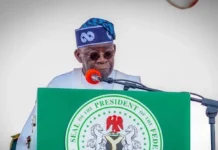
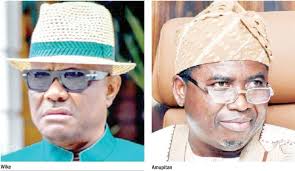
To ensure a smooth process, the FCT Minister, Nyesom Wike, declared Friday a work-free day and imposed a 22-hour restriction of movement from 8 p.m. on Friday to 6 p.m. on Election Day. The directive, approved by President Bola Tinubu, is aimed at facilitating voter participation and preventing disruptions.
The FCT Police Command, in collaboration with the Army, Navy, Department of State Services, DSS, and the Nigeria Security and Civil Defence Corps, NSCDC, has deployed approximately 12,000 personnel across the territory. Authorities have assured residents that only voters, accredited observers and election officials will be allowed movement during the restricted period.
In addition, The Commissioner of Police in charge of FCT, Mr Miller Dantawaye, has redeployed Divisional Police Officers, DPOs, in the territory ahead of Saturday’s Area Council elections.
The Police Public Relations Officer in the FCT, SP Josephine Adeh, said this in a statement on Friday in Abuja.
Dantawaye said the redeployment was in line with the directive of the Inspector General of Police, IGP, Mr Kayode Egbetokun.
“This proactive measure is part of a comprehensive security arrangement aimed at strengthening operational effectiveness, and upholding the highest standards of professionalism before, during, and after the elections.
“While complying with the directive of the I-G, Dantawaye charged the affected DPOs to discharge their duties with utmost professionalism, impartiality, and dedication,” he said.
Dantawaye pledged the committment of the command to safeguarding the electoral process and guaranteeing a free, fair, and credible election, urging FCT residents to remain peaceful, law abiding, and actively participate in the democratic process by exercising their civic responsibilities on election day.
The CP said the restriction of movement order by the command across the territory ahead of the election starts 8:00 pm on Friday 6:00 pm on Saturday, adding that essential service providers and election officials were however, exempted from the restriction order.
Dantawaye enjoined residents to remain vigilant and promptly report any suspicious persons or activities to the command through its emergency lines on 08032003913 and 08061581938.
While civil society groups welcomed the security deployment, they cautioned against overreach and called for professionalism and non-partisanship.
The elections mark the first major outing under the Electoral Act 2026. INEC has deployed 2,822 Bimodal Voter Accreditation System, BVAS, devices and pledged adherence to the law’s provisions.
However, concerns linger over the absence of explicit provisions mandating real-time electronic transmission of results. A coalition of over 70 civil society organisations, operating under the Nigeria Civil Society Situation Room, has demanded 100 per cent real-time upload of polling unit results to the IReV portal.
Observers argue that how INEC navigates these provisions will shape public confidence ahead of the 2027 general elections.
INEC Chairman, Professor Joash Amupitan (SAN), described the polls as both an administrative and institutional test. A mock accreditation exercise conducted in 289 polling units reportedly yielded satisfactory results.
In the days leading to the vote, dramatic political realignments altered the landscape. In AMAC, Peoples Democratic Party, PDP, candidate Zadna Dantani withdrew and endorsed APC incumbent Christopher Maikalangu. Similarly, in Bwari, PDP candidate Julius Adamu stepped down in support of APC’s Joshua Ishaku.
These withdrawals are widely interpreted as consolidating APC dominance in the territory, particularly amid the perceived influence of Minister Wike.
In Abaji, incumbent APC chairman Umar Abdullahi is seeking re-election against Sokodabo Bilyaminu, PDP, and Mohammed Ibrahim, ADC.
In Gwagwalada, Yahaya Shehu, APC, faces Mohammed Kasim, PDP, in what had initially appeared competitive. Kuje and Kwali also present open contests, though party structures favour the ruling party.
The Aljazirah Octopus, after its symbolic predictive ritual, projected APC victories in all six councils, citing incumbency advantage, party machinery, recent defections and strategic alliances.
Despite the high PVC collection rate, voter turnout remains a major concern. Historically, FCT Area Council elections have recorded dismal participation, particularly in urban AMAC. Civil society monitors have flagged AMAC as a potential hotspot for vote buying and intimidation, while Gwagwalada is reportedly vulnerable to political thuggery and indigene-settler tensions.
A civil society organisation, Nigeria Civil Society Situation Room, says it will deploy observers for the elections. Convener of the group, Yunusa Ya’u stated this at a news conference on Friday in Abuja.
Ya’u, whose speech was read by the Co-convener, Celestine Odo, said that the election would cover 62 electoral wards and 2,822 polling units, with 1,680,315 registered voters expected to elect six chairmen and 62 councillors.
“The Situation Room will rely on reports from 68 accredited observers, partner organisations and its election reporting app, while member-groups, including Kimpact Development Initiative and CLEEN Foundation, will also deploy observers,” he said.
The Situation Room recalled that in 2022, voter turnout in AMAC stood at a mere 5.09 per cent. Analysts warn that economic hardship, weak grassroots mobilisation and scepticism about electoral transparency may once again dampen enthusiasm.
Yiaga Africa has predicted low turnout, citing declining public trust and insufficient civic education.
Though technically municipal in scope, the FCT elections carry broader political symbolism. In the 2023 presidential election, the APC failed to secure 25 per cent of the vote in the FCT – a development that sparked intense legal debate and underscored shifting political currents in the capital.
For the APC, reclaiming and consolidating Abuja is strategically vital. For opposition parties, particularly the African Democratic Congress, ADC, and the Social Democratic Party, SDP, the polls represent an opportunity to test organisational strength and electoral integrity ahead of 2027.
The absence of the Labour Party, which dominated the FCT presidential vote in 2023, has further reshaped the dynamics.
Ultimately, the Area Councils remain the closest tier of elected authority to FCT residents. They oversee primary education, sanitation, markets, rural roads and community health facilities—services that directly affect daily life.
Whether today’s elections deliver credible leadership or reinforce concerns over apathy and inducement will depend on voter participation, security professionalism and INEC’s transparency.
As ballots are cast across Abaji’s agrarian communities, AMAC’s urban estates, Bwari’s academic hubs, Gwagwalada’s bustling markets, Kuje’s expanding settlements and Kwali’s rural wards, the capital stands at a crossroads.
If the Aljazirah Octopus’ forecast holds as it always has, the APC will emerge with a clean sweep – reshaping the political calculus of Abuja and sending an early signal into the 2027 electoral horizon.