Mariam Sanni
The Nigerian Airforce has assured commitment in ensuring safety, protecting national assets and creating an environment conducive for economic growth and stability.
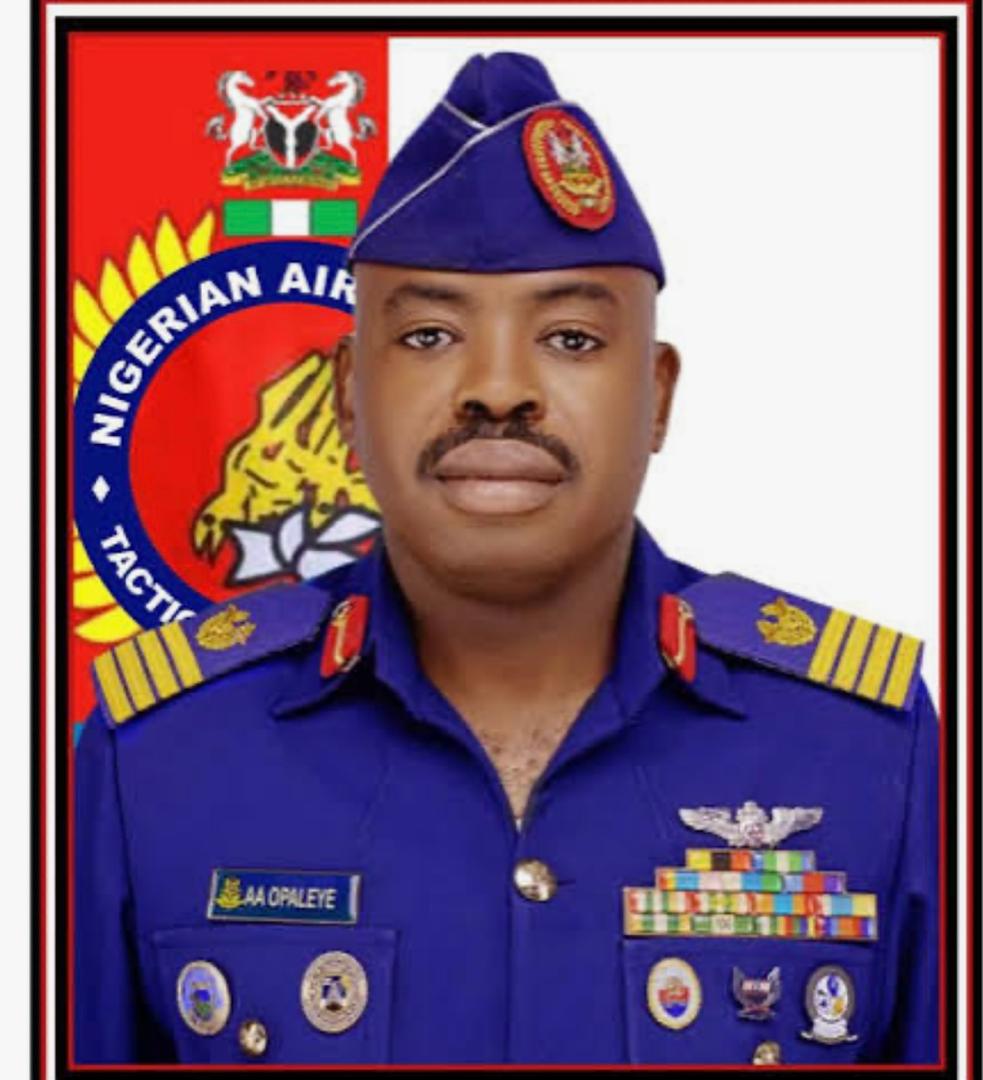
The Commander 115, Special Operations Group, Port Harcourt, Group Capt. Abdulafeez Opaleye while briefing the press, during a media tour to the region stressed that with sustained collaboration among security agencies, government authorities and host communities, there will be lasting solutions to issue of oil theft i the Niger Delta Region.
He reiterated that the Armed Forces are here to serve the nation, noting that when oil production increases, national revenue improves, the economy grows, and the benefits ultimately reach the people.
The Commander lamented that one of the major challenges confronting the operations is the evolving nature of criminal activities within the Niger Delta.
He added that the problem is no longer about crude methods or isolated incidents; rather, criminal networks have become increasingly adaptive, organised and reactive to security measures.
Illegal operators now employ sophisticated techniques to evade detection.
He said that these activities are deliberately timed and well-coordinated, making detection and interception more difficult.
“The problem is no longer about crude methods or isolated incidents; rather, criminal networks have become increasingly adaptive, organised and reactive to security measures.
Illegal operators now employ sophisticated techniques to evade detection. For instance, crude oil is siphoned through long hoses, sometimes stretching three to four kilometres from pipelines into concealed locations within communities. These activities are deliberately timed and well-coordinated, making detection and interception more difficult. When the moment is right, the perpetrators disappear, leaving little visible trace.
“This evolving threat presents a general operational challenge, particularly in the areas of manpower and equipment. While efforts are ongoing to increase personnel strength, it is equally important that additional manpower is adequately trained, properly equipped and well-supported. Increasing troop numbers without corresponding resources limits operational effectiveness.
“We are, however, making progress through locally driven initiatives, improved training and better coordination. With sustained government support and continuous assessment of our operational needs, we are confident that these challenges will be addressed.
“Beyond kinetic operations, community engagement remains critical. We believe strongly that host communities must be fully integrated into the security framework. When communities see security forces as partners rather than adversaries, intelligence sharing improves and criminal networks are further isolated.
“Our message is clear: the Armed Forces are here to serve the nation. We are not here to fight communities or innocent citizens. We are partners in progress. When oil production increases, national revenue improves, the economy grows, and the benefits ultimately reach the people.
“In conclusion, our objective is to ensure safety, protect national assets and create an environment conducive for economic growth and stability. With sustained collaboration among security agencies, government authorities and host communities, we are confident that lasting solutions to these challenges are achievable,” he noted .
In a brief presented by Ft.-Lt. Aro, Air Component of Joint Task Force Operation Delta Safe (OPDS) destroyed no fewer than 131 illegal refining sites and neutralised several crude oil theft facilities across the Niger Delta in 2025.
It was revealed that the air unit conducted 495 missions in 779 sorties, logging over 784 flight hours in support of joint operations.
The briefing said that sustained air operations had reshaped the theatre of operations, denied criminals freedom of action and enabled ground and maritime forces to exploit operational gains, contributing to improved crude oil production and national revenue.
According to the Air Component, air assets deployed during the period included T-129 ATAK attack helicopters, EC-135 helicopters, Diamond-62 aircraft and Wing Loong II Unmanned Combat Aerial Vehicles (UCAVs), which played critical roles in intelligence gathering, interdiction and combat support.
The Director, Defence Media Operations
Maj.-Gen. Michael Onoja, in his remark he noted that historically there has been some level of antagonism between the military and the press, adding that DMO is determined to correct that narrative.
Major General Onoja emphasised the need for strong civil-military relations and effective strategic communication, noting that accurate reporting of military operations would enhance public confidence and national cohesion.
He reiterated that security remained a collective responsibility, calling on all Nigerians to support ongoing efforts to secure the Niger Delta and protect critical oil and gas infrastructure.