…earmarks N100bn to clear local contractors’ debts
By Charles Ebi
Federal Government has earmarked N2.3 billion in the 2026 budget for the payment of benefits and entitlements to Nigeria’s former presidents, heads of state, and their deputies.
This is according to details contained in the 2026 Appropriation Bill under the line item tagged “Entitlements of former Presidents/Heads of State and Vice Presidents/Chief of General Staff”.
The allocation covers pensions, allowances, and other statutory benefits provided for former top political officeholders under Nigerian law.
Budget documents show that the N2.3 billion provision applies to both civilian and military former leaders of the country.
Beneficiaries include former presidents Olusegun Obasanjo, Goodluck Jonathan, as well as former military heads of state General Ibrahim Babangida, General Yakubu Gowon, and General Abdulsalami Abubakar.
The allocation also extends to former vice presidents and equivalent military positions. Named beneficiaries include Atiku Abubakar, who served as Vice President from 1999 to 2007; Namadi Sambo, Vice President between 2010 and 2015; and Yemi Osinbajo, who served from 2015 to 2023.
Also included is Okoh Ebitu Ukiwe, who functioned as de facto Vice President between 1985 and 1986 during the Babangida military regime.
Beyond ex-presidents and their deputies, the 2026 budget also makes significant provisions for other categories of retired public officials.
The Federal Government allocated N24.79 billion for the benefits of retired Heads of Service and Permanent Secretaries.
In addition, N1 billion was set aside as severance benefits for retired heads of government agencies and parastatals.
These allocations fall under recurrent expenditure and are aimed at meeting statutory obligations owed to senior public officeholders after retirement.
Spending on former political officeholders has remained a recurring feature of Nigeria’s annual budgets and often attracts public scrutiny, especially amid fiscal pressures and rising debt levels.
With Nigeria grappling with subsidy removals, revenue shortfalls, and high inflation, allocations to political entitlements continue to raise questions about public sector cost management and fiscal sustainability.
Nigeria’s Revenue Mobilisation, Allocation and Fiscal Commission ,RMAFC, determines the remuneration and benefits of political officeholders, including former presidents and vice presidents.
These entitlements are backed by law and typically cover pensions, housing, vehicles, medical care, and security.
Similar provisions have appeared in previous federal budgets, making the 2026 allocation a continuation rather than a new policy direction.
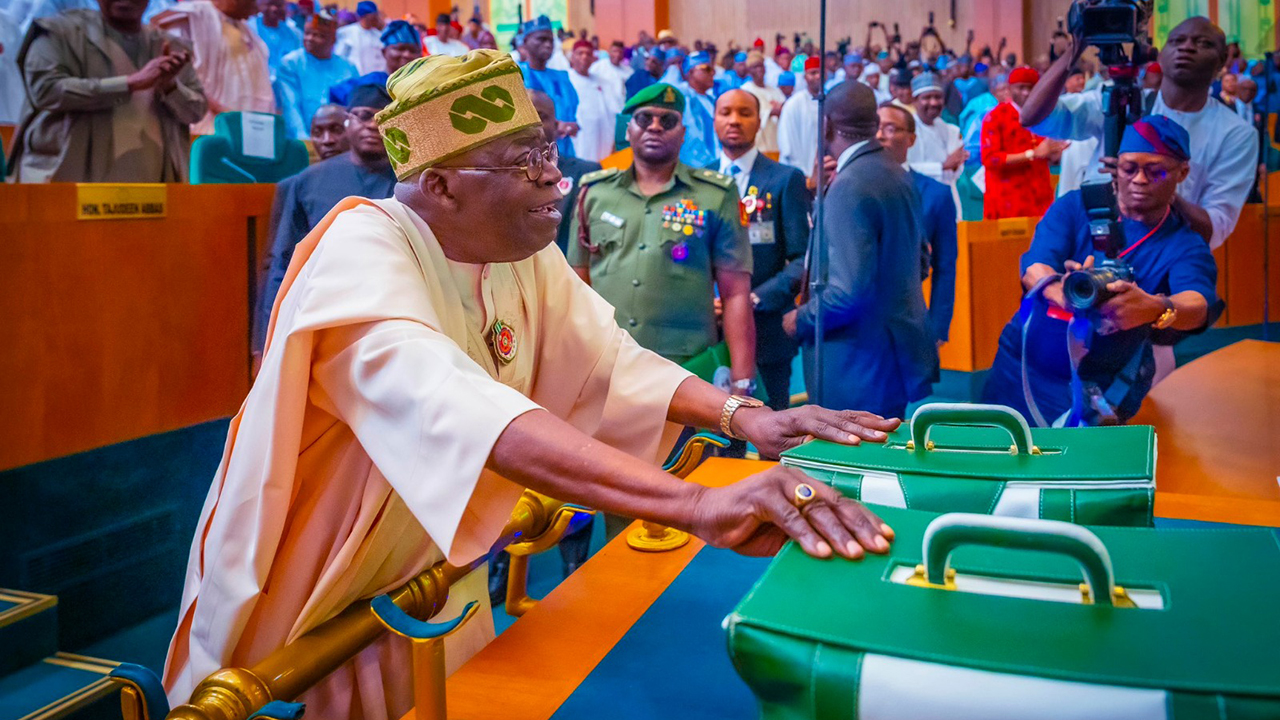
President Bola Tinubu had in December 2025, presented the 2026 budget to the National Assembly with a N23.85 trillion deficit.
Tinubu noted that expected total revenue for 2026 is projected at N34.33 trillion.
In a related development, the Government has also earmarked N100 billion in the 2026 budget for the settlement of outstanding obligations owed to indigenous contractors across the country.
This is according to details contained in the 2026 Appropriation Bill under the line item titled “Payment of Local Contractors’ Debts”.
The provision signals an attempt by the government to address mounting liabilities to local firms executing public sector projects.
Budget breakdowns show that the N100 billion allocation is dedicated solely to clearing arrears owed to Nigerian-owned contracting firms for completed or ongoing government projects.
These debts have accumulated over several years due to funding shortfalls, delayed budget releases, and cash flow constraints faced by the Federal Government.
The allocation suggests official recognition of the growing financial strain on indigenous contractors, many of whom rely heavily on bank financing to execute government contracts.
The provision follows sustained pressure from industry groups, particularly the All Indigenous Contractors Association of Nigeria ,AICAN, which has repeatedly raised concerns over unpaid invoices.
The association has previously staged demonstrations in Abuja, protesting prolonged delays in payments and warning that many local contractors are on the brink of collapse.
According to the group, several contractors are unable to service bank loans obtained to finance government projects, exposing them to loan defaults, mounting interest charges, and potential asset seizures by financial institutions.
Local contractors play a critical role in Nigeria’s infrastructure development, employment generation, and local content growth.
Delayed payments weaken their balance sheets, reduce capacity to take on new projects, and increase non-performing loans in the banking sector.
The N100 billion allocation could ease liquidity pressures, boost contractor confidence, and support jobs
Outstanding contractor debts have been a recurring issue in Nigeria’s public finance management, with similar budgetary provisions made in previous years.
However, contractors often complain that budgetary allocations do not always translate into actual cash payments.
The effectiveness of the 2026 provision will therefore depend on timely releases and clear verification of genuine claims.
The inclusion of this line item also comes amid broader fiscal pressures, as the Federal Government balances debt servicing costs, personnel expenses, and capital expenditure commitments in the 2026 budget framework.
In December, President Bola Tinubu set up a multi-ministerial committee to resolve the ongoing crisis over unpaid federal contractors, with outstanding payments.