Joel Ajayi
The era of missing files, delayed approvals, and paper-clogged bureaucracy in Nigeria’s Federal Civil Service has officially come to an end.
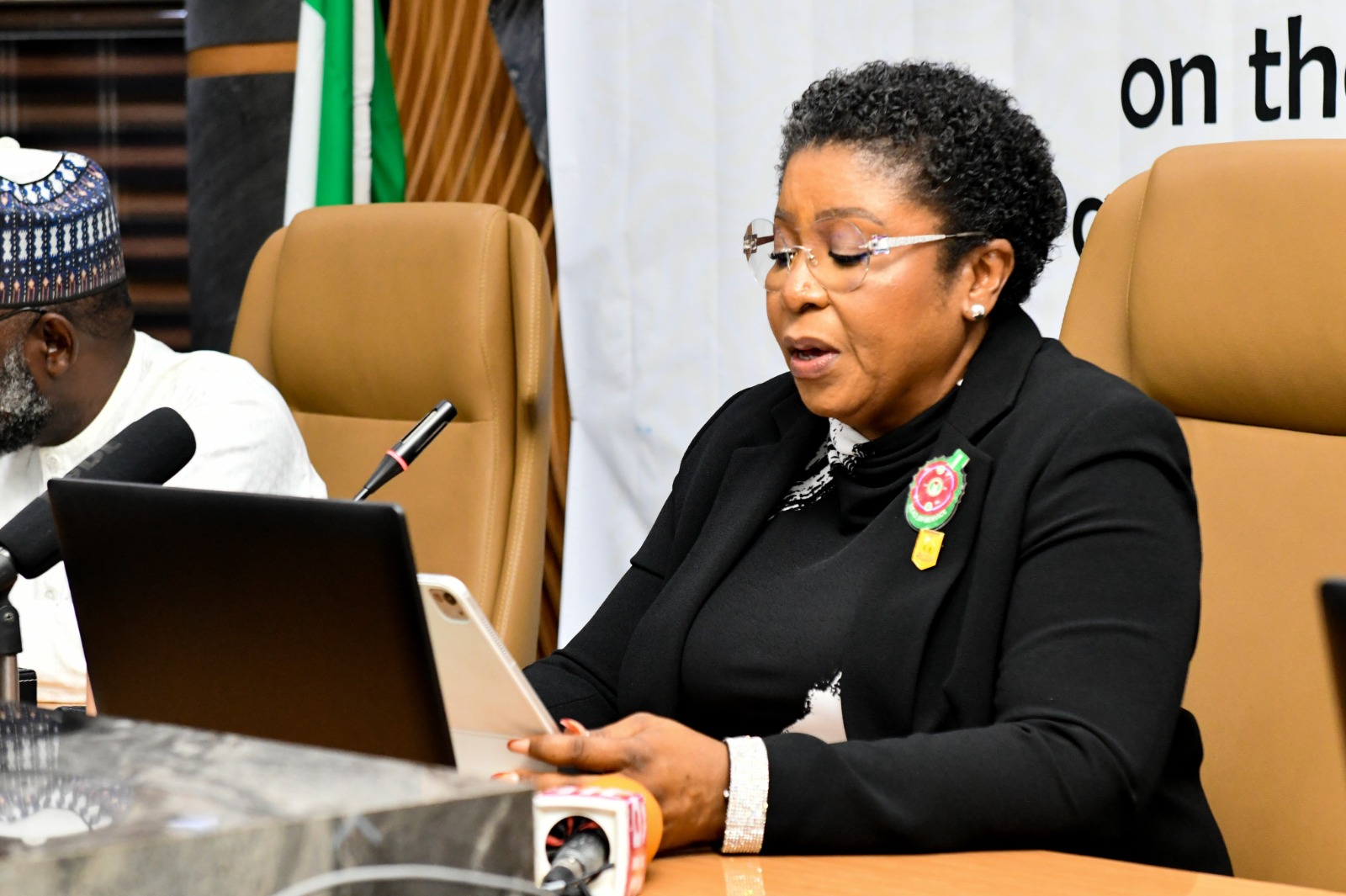
The Head of the Civil Service of the Federation (HCSF), Mrs. Didi Esther Walson-Jack, OON, mni, has announced the full transition of all Federal Ministries and Extra-Ministerial Departments (MEMDs) to entirely digital operations, marking a historic shift in the administration of government business.
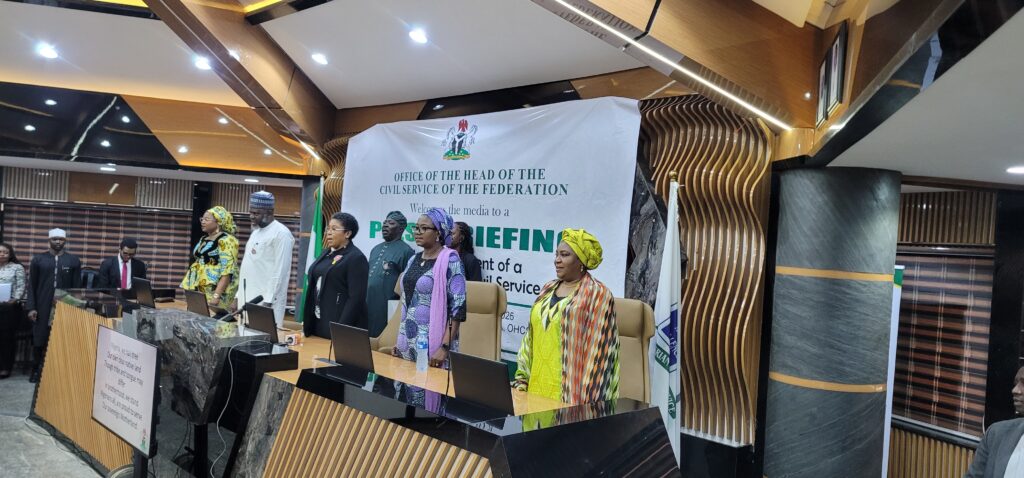
Speaking at a Press Briefing on Wednesday, in Abuja, Walson-Jack disclosed that with effect from the close of business on Tuesday, December 30, 2025, all 33 Federal Ministries and five key Extra-Ministerial Departments have fully implemented Presidential and administrative directives mandating paperless workflows.
According to her, the development represents a decisive break from legacy bureaucratic processes and the emergence of a modern, accountable, and technology-enabled public service.
“This reform signifies the end of paper-based operations in the Federal Civil Service. The days of missing or misplaced files are gone. What we have now is a system built on efficiency, accountability, transparency, and speed,” she said.
The HCSF explained that while the paperless reform builds on years of incremental digitalisation under successive administrations, implementation gained unprecedented momentum following her assumption of office in August 2024.
From just three MEMDs operating limited paperless systems at the time, digital operations have now expanded to 38 MEMDs, including the State House, the Office of the Secretary to the Government of the Federation, the Federal Civil Service Commission, and the Office of the Accountant-General of the Federation.
A major pillar of the reform is the rollout of GovMail, the official government email platform. Official email accounts increased from fewer than 20,000 in 2024 to over 100,000 by December 2025, ensuring secure, auditable, and professional communication across government while saving the Federal Government billions of naira annually in consolidated ICT costs.
Under the new regime, physical paper submissions are no longer accepted by participating Ministries and Extra-Ministerial Departments. All correspondence must now be submitted electronically to official registry email addresses published on the Office of the Head of the Civil Service of the Federation (OHCSF) website. Citizens can also track their submissions through the Federal Civil Service Paperless Portal.
To sustain the reform, Walson-Jack stated that the OHCSF will commence a Service-wide Training-of-Trainers programme in January 2026, with support from the United Nations Development Programme (UNDP), alongside continued investments in cybersecurity, connectivity, and workflow digitisation.
The Federal Government attributed the success of the initiative to the leadership of President Bola Ahmed Tinubu, GCFR, strong inter-ministerial coordination, and the technical support of institutions such as Galaxy Backbone Limited (GBB) and the National Information Technology Development Agency (NITDA).
Earlier, in his welcome remarks, the Permanent Secretary, Special Duties Office, Mr. Abdulkarim Ozi Ibrahim, described the gathering as the culmination of an intensive reform journey that began with the introduction of the Enterprise Content Management (ECM) System under the Federal Civil Service Strategy and Implementation Plan (FCSSIP) 2017–2020.
He noted that the foundation was strengthened by the Service Continuity reforms (2021–2025), also known as the FC 2025 Architecture, and further accelerated during the period declared as the “Year of Accomplishment.”
“As the coordinating office for this special reform initiative, we witnessed firsthand the dedication of ECM teams and change champions across the Service, whose commitment made this achievement possible,” Ibrahim said.
He expressed appreciation to strategic partners, particularly Galadine Park Moon Limited, for their technical support, and thanked members of the media for documenting what he described as a defining moment in Nigeria’s public service reform.
The paperless transition, officials said, aligns with Nigeria’s national development priorities and international best practices, reinforcing government’s commitment to efficiency, transparency, accountability, and improved service delivery.