
•Funds embezzled through shoddy approvals •Payments made without budgetary Cover •Commission involved in tax violations, duplicated payments
By Jibrin Ndanusa and Juliet Ibimina
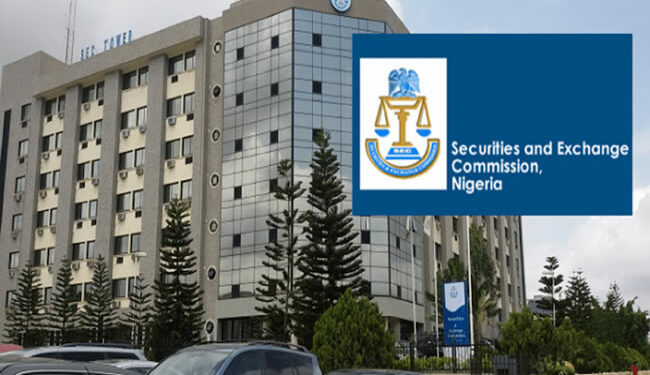
As the first instalment of this investigation laid bare, the Securities and Exchange Commission — Nigeria’s foremost capital market regulator and an institution entrusted with safeguarding transparency, fairness and investor confidence — now stands at the centre of grave allegations involving the mismanagement and diversion of more than ₦32 billion. For an organisation whose very mandate is to uphold integrity in the financial sector, the weight of these accusations cannot be overstated. Yet, despite the serious questions raised and the repeated requests for clarification, the Commission has maintained an unbroken and conspicuous silence.
With anti-graft agencies signalling readiness to act once credible evidence is made public, and analysts warning of deepening institutional decay if such allegations are left unanswered, the urgency of full disclosure becomes ever more apparent. As the nation’s financial markets navigate global uncertainty, the integrity of their principal regulator is not merely an administrative concern but a matter of national economic stability.
In this second part, AljazirahNigeria presents the figures, the facts and the transactions that the Commission has so far declined to explain. The details that follow illuminate not only the scale of the alleged misconduct but the systemic vulnerabilities that allowed it to take root.
From our investigations, the numbers are eye-watering and the explanations are thin. The trail of questionable payouts at Nigeria’s Securities and Exchange Commission, SEC, charged with regulating and developing the capital market to ensure fairness, transparency and operational efficiency, seems both chaotic and deliberately concealed. Fresh revelations suggest that more than N32 billion may have been siphoned off through irregular approvals, unchecked allowances, and a culture of spending that openly mocks established financial regulations.
What emerges is a clear picture of a regulator that has failed to regulate itself. According to internal documents, staff received an astonishing N11.08 billion in payments for dressing, leave, medical, education, rent and other allowances which were not captured in the consolidated salary structure of the agency. Officials describe them as “irregular allowances”. According to industry watchers, these allowances are actually a slush channel disguised as employee welfare.
The questionable “generosity” did not end with the rank and file. Certain directors reportedly pocketed an additional N625.9 million in ineligible allowances, yet the criteria for these payments were still unstated and approvals untraceable. It is perhaps here that the pattern sharpens: payments made outside policy, processed without oversight, and quietly slipped through an approval chain that appears to have dissolved into rubber-stamping.
In a move that raises both compliance and ethical questions, the Commission allegedly failed to deduct and remit N545 million in Pay As You Earn, PAYE, tax from its staff. In other words, public servants took home gross pay without tax deductions, while the organisation responsible for enforcing compliance across the capital market stood in violation of its own fiscal obligations. An action that is both an administrative blunder; and a breach of national tax laws.
In a similar vein, there is the issue of medical expenses where both double payments and lack of authorization was recorded. This is because despite making mandatory annual payments to the National Health Insurance Scheme, NHIS, the Commission reportedly paid out a further N173 million in medical bills to staff. “Was NHIS failing to provide services, or were these payments simply another loophole?” Shuna Fakum asked.
Then came the car-grant drainpipe, a clear case of the excesses and impunity by the commission. About N3.38 billion was paid to management staff under the guise of monetised car grants. The scale is baffling—several times more than the value of the agency’s actual vehicle fleet. The irregularity metastasized into gratuities and severance benefits where retired staff walked away with N1.01 billion in payments processed outside statutory guidelines. In typical fashion, the Commission has yet to clarify who received these payouts or why they were approved without recourse to the civil service rules governing retirement benefits.
In what appears to be the fattest cow in these cases of administrative impunity evidenced by all these questionable disbursements is a staggering figure: N27.19 billion in extra-budgetary expenditure. This, more than anything else, points to systemic failure, because government agencies cannot legally spend what has not been budgeted for. Yet SEC appears to have operated on a parallel budget, one neither appropriated by the National Assembly nor monitored under existing financial regulations.
Speaking to this medium, Ndubisi Nwankwo queried: “Where did these funds come from? How were they justified? Who signed off on them? And it becomes more fearfully disheartening to know that these shocking irregularities and anomalies are not restricted to SEC, but cuts across several government ministries, agencies and parastatals. So while the vast majority of Nigerians wallow in abject poverty, a privileged few are actually frittering away the common wealth of the nation”.
While the list of irregular payments is far longer than the sampled items disclosed so far, the pattern is unmistakable: Payments outside lawful salary structures, allowances lacking policy backing, tax violations and duplicate benefits.
Others are, unapproved grants, retirement payouts with no legal basis and millions spent with no budgetary provision”.
“Each entry is an indictment that ultimately paints the portrait of an institution operating with impunity”, Fakum says. “It raises a series of questions such as: Who authorised these payments? Which oversight mechanisms failed and why? How did the Commission process extra-budgetary spending on such a massive scale? Where are the internal audits, plus who benefited, and how does the regulator rebuild public confidence after a breach of this magnitude?”
‘I expect the Commission to respond to these questions so as to rebuild the confidence of the public in its activities..
“Ultimately, until law enforcement and anti graft agencies begin to act without fear or favour, it will be difficult for Nigeria’s image to be redeemed in the comity of nations. And for this to happen, government must not only talk, but be seen to be committed to it’s fight against corruption”.