Mariam Sanni
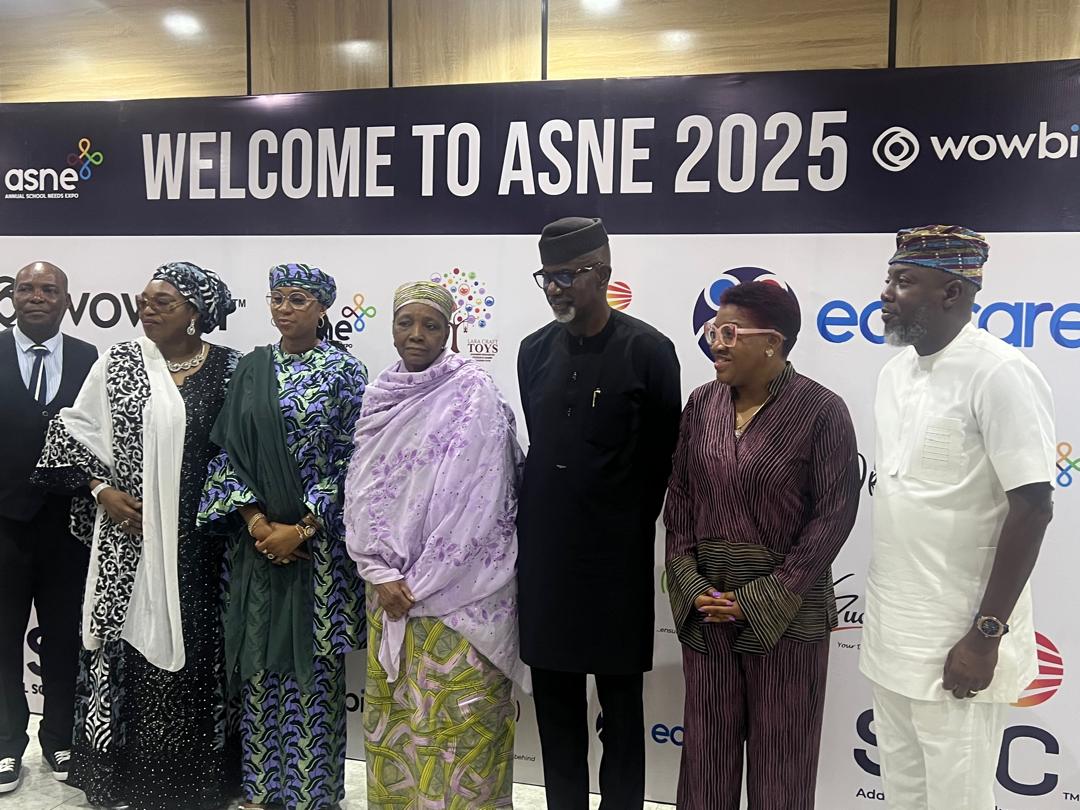
An Educationist and Founder of Annual School Needs Expo, ASNE, Emem Opashi has suggested that education policies should prioritize the Nigerian child’s needs to ensure long-term effectiveness.
She made this suggestion during an interviews with the pressmen at the ASNE 2025 held in Abuja.
Opashi explained that policies should be well-thought-out, considering all stakeholders, and should have the core of the Nigerian child at heart to ensure longevity.
She emphasized the importance of hearing voices from different sectors, including the private sector, government, and business.
According to her ,the goal is to address challenges and look at them from various industry perspectives.
The founder said that the theme of the year’s event, “Education X: Breaking Conventional Boundaries,” and its focus on breaking barriers through technology and collaboration.
She discussed the potential for the public sector to overrun the private sector, expressing a desire to see public schools receive a better and fairer education.
She commended the government for having conversations and being intentional about sharing progress and challenges.
“When a policy is made, we have to think of all the stakeholders, who the people it’s going to impact, so that we don’t have to keep taking back and bringing policies. So sometimes we give a policy, and then if another government comes in, they take it back, or they change it, or they cancel it and all that.
“ So if we’re able to really have the core of the Nigerian child at heart and let it not be something someone just woke up or imported from another country. So if our policies are able to have the core of the Nigerian child at heart and the benefit and the and the, you know, the the love for the Nigerian child, if we’re able to have that at the core of these policies, then I believe that they will transcend and outlive even new governments that come in,” she said.
The Founder of The Bridge Leadership Foundation, Liyel Imoke in his keynote address emphasized the need for innovative, inclusive, and cross-sectoral collaboration in education.
He highlighted Nigeria’s educational evolution from traditional Indigenous systems to colonial influences, and post-independence expansions like the 1976 and 1999 Universal Primary Education (UPE).
Imoke who was also a former Governor of Cross River state noted global shifts towards creativity, emotional intelligence, and vocational education, citing examples from Finland, Singapore, and South Korea.
He called for investments in teacher training, digital infrastructure, and policy to ensure Nigeria becomes a creator of educational innovation rather than just a consumer.
Also, National Association of Proprietors of Private Schools, NAPPS , Hajia Samira Jibir in her remark discussed the importance of having a system in place to avoid arbitrary taxation and mentions the roles of auditors and the accounts department.
She stressed the need to address the issue of out-of-school children and the federal government’s partnership with private schools, especially low-income ones.
She noted the involvement of private schools in reducing unemployment and the need for accurate statistics.
Sent from my iPhone