Paul Effiong, Abuja
Speaker of the House of Representatives, Tajudeen Abbas has advocated legislative action toward establishing a multi-level policing system, describing it as a necessary step towards addressing the nation’s numerous security challenges.
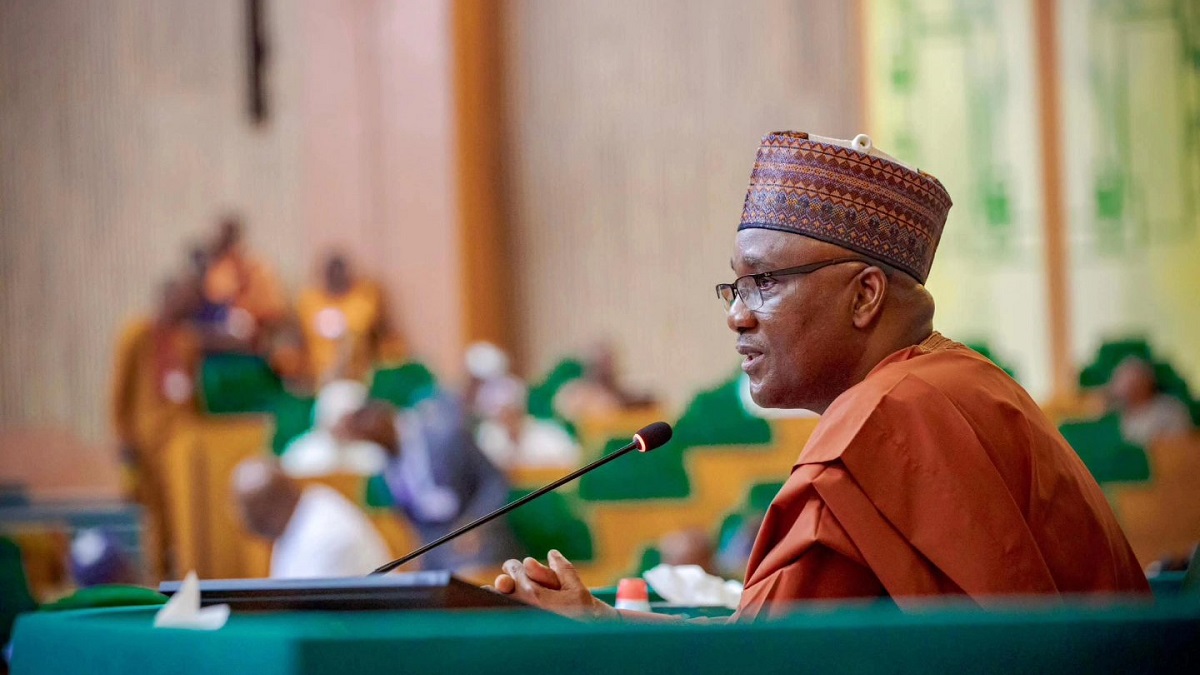
Speaker Abbas stated this at the public hearing on Private Intelligence and Investigation Council Bill, 2024, organised by the House Committee on National Security and Intelligence held at the National Assembly Complex in Abuja, yesterday.
He disclosed that security reforms have become a national priority and must move from “theory to decisive legislative action.”
Represented by the member representing Ilorin West/Asa Federal Constituency, Muktar Shagaya, Abass said creating state police through constitutional amendment remains a viable option deserving serious national consideration.
He also emphasized the need to strengthen community policing as provided in the Police Act 2020 to make it more effective and responsive to local realities.
“The time has come for the debate on multi-level policing to move from theory to decisive legislative action. Creating state police through constitutional amendment remains a viable option that deserves serious consideration. However, beyond constitutional reform, we must also strengthen community policing to make it more effective and responsive to local realities.”
He said the House remains committed to reforms that will enhance public safety and strengthen Nigeria’s overall security architecture.
According to him, the National Assembly’s focus on security-related legislation, including the proposed Private Intelligence and Investigation Council Bill, underscores its determination to provide a legal framework that promotes accountability, professionalism and collaboration among public and private security actors.
The presiding officer explained that the Private Intelligence and Investigation Council Bill seeks to create a regulatory framework for private intelligence and investigation services, ensuring that they operate ethically, responsibly and in compliance with professional standards.
He said the bill aims to implement uniform practices that will enhance service quality, promote continuous training and capacity development, and encourage stronger cooperation between private and public security institutions.
He reaffirmed that the 10th House of Representatives remains committed to transparency, accountability and inclusiveness in all legislative engagements.
The Chairman, House Committee on National Security and Intelligence, Ahmad Satomi, said the proposed legislation will mark a major step toward strengthening the national security architecture through the regulation and professionalisation of private intelligence operations.
Satomi described the bill as a forward-looking initiative that seeks to ensure accountability, professionalism and ethical conduct within the country’s growing private intelligence and investigation industry.
According to him, the proposed council will serve as a regulatory body responsible for standardising industry practices, providing accreditation and certification, and promoting continuous training and collaboration between the private and public security sectors.
“This marks a significant step towards strengthening our national security framework and ensuring the professionalism of private intelligence and investigation services,” Satomi said.
“The proposed bill seeks to establish a regulatory framework that ensures ethical conduct and accountability. If established, the Council will standardize practices, promote continuous training, and foster collaboration between private and public security sectors.”
He noted that the initiative comes at a time when Nigeria is confronted with a web of security challenges ranging from insurgency and banditry to cybercrime and kidnapping, stressing that innovative approaches are required to strengthen the country’s security infrastructure.
Citing recent data, Satomi said the Nigerian Bureau of Statistics (NBS) reported over 51.89 million household crime incidents between May 2023 and April 2024, with kidnapping alone accounting for 2.23 million incidents and ₦2.23 trillion paid in ransoms during the same period.
“These figures,” he said, “underscore the magnitude of the security threats confronting our nation and the need for all stakeholders, governmental and private, to work collaboratively. Security, as it is often said, is everyone’s business.”
The lawmaker emphasized that while the efforts of Nigeria’s security agencies are commendable, the evolving nature of threats demands additional layers of support, regulation, and intelligence coordination. He said the bill aligns with the National Assembly’s legislative efforts to address security concerns through proactive, intelligence-driven reforms.
According to him, the benefits of the bill are extensive. Beyond establishing a council to accredit private intelligence and investigation services, it seeks to streamline compliance mechanisms, enforce ethical standards, and create partnerships between public and private security agencies for improved outcomes.
However, Satomi acknowledged that not all stakeholders fully agree on every provision of the proposed legislation. He disclosed that while many of the submissions received by the committee were supportive, some expressed concerns regarding possible overlaps with existing laws and the mandates of established security institutions.
“For instance,” he said, “there is a concern that upholding Section 1(3)(a–f) of the Bill as it stands may dilute the exclusive statutory responsibility of an agency in matters of security clearance and internal vetting. Another concern referenced Section 4(i) of the Nigeria Police Act, 2020, warning that the bill may create duplication, legal disputes, and confusion over authority.”
He noted that these differences reveal deeper institutional issues within Nigeria’s security ecosystem, particularly the long-standing challenge of poor inter-agency collaboration and inefficient intelligence sharing.
“The obvious disparities in the stance adopted by various security agencies on oversight of intelligence matters once more bring to the fore the problem of non-collaboration in intelligence sharing and utilization,” Satomi observed.
“This issue has hampered efficient delivery of security services, and this bill may present us an opportunity to address that important aspect of our national security governance structure.”
Satomi commended Speaker Abbas and other members of the House for their support in prioritizing legislative measures that seek to modernize Nigeria’s security framework. He urged all participants and stakeholders at the hearing—including representatives of security agencies, civil society, and the media—to make meaningful contributions that would guide the committee’s final report.
“We assure you that all contributions will be taken into consideration by this committee. The discussions, observations, and submissions from this hearing will significantly shape the report that will be presented to the House for further legislative action.”
Satomi expressed gratitude to lawmakers, invited stakeholders and members of the press for honoring the committee’s invitation, reiterating his belief that the passage would “greatly enhance the integrity and effectiveness of private intelligence and investigation services in contributing to national security and public safety.”