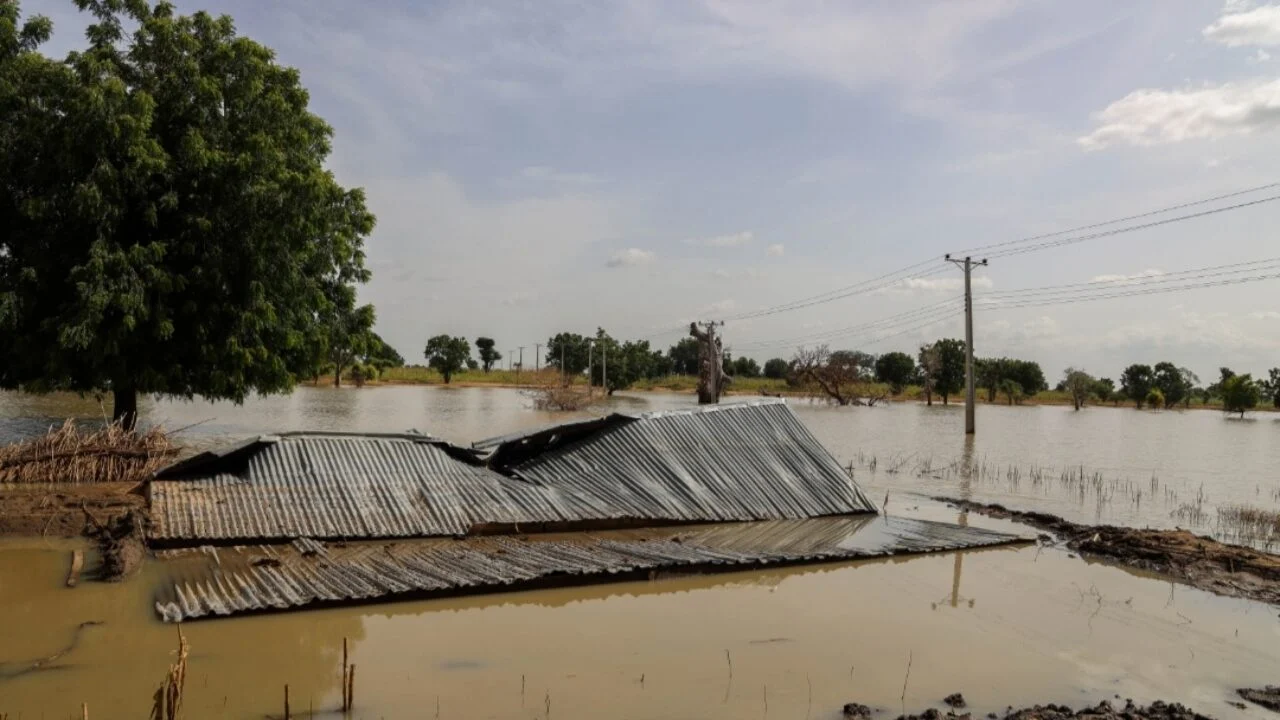
Sokoto, Kebbi and Zamfara State governments have embarked on awareness campaigns and reactivation of disaster response teams as part of strategies to curb the envisaged flood in their respective areas.
The states have intensified efforts, as some communities are experiencing flooding, windstorm and other associated disasters.
The sensitisation and response teams reactivation were part of proactive measures to mitigate the impact of the prediction by the Nigerian Meteorological Agency, NiMet, on possible occurrence of disasters as a result of heavy downpour.
NiMet had advised governments and residents to clear drainage channels, avoid walking or driving through floodwaters and relocation from high-risk areas to more safe areas.
Other safety tips include preparing emergency kits, switching-off electricity and gas during flooding, reinforcing mudslide-prone areas and raising community awareness.
Special Adviser to Governor Ahmad Aliyu on State Emergency Management Agency, SEMA, Alhaji Aminu Liman-Bodinga said the agency had collaborated with relevant stakeholders to ensure effective response.
Liman-Bodinga said the institutions comprise the National Emergency Management Agency, NEMA, Nigeria Police Force, Federal and State Fire Services, Nigerian Security and Civil Defense Corps, NSCDC, Nigerian Army, and Nigeria Red Cross among others.
He explained that it is time for local government areas to be prioritised based on NiMet’s prediction and the state government had put proactive measures in place across communities besides increased awareness.
The special adviser said government had stockpiled relief materials including foodstuffs, building materials and household items at various warehouses to support the affected residents in case of disasters.
Liman-Bodinga added that continuous sensitisation campaigns are ongoing via radio, television, marketplaces, community contacts and other outlets.
The SEMA Director, Relief and Rehabilitation in Sokoto, Mr Mustapha Umar, said no fewer than 1,400 households were affected by flood in Kware Local Government Area, adding that the victims were supported by the agency.
Umar said SEMA ensured maximum collaboration with relevant stakeholders comprising state and non-state actors on disaster mitigation strategies and prevention efforts.
In Zamfara, the Commissioner for Humanitarian Affairs, Alhaji Musa Kainuwa said government ensured the evacuation of refuse dumps and clearance of waterways as a measure to facilitate free flow of water in drainages to prevent flooding.
Kainuwa cautioned residents against dumping of refuse on drainages, waterways and erecting structures within flood prone areas, and urged riverine communities to move to high and safe areas to avert casualties arising from eventual flooding.
He said the state government in collaboration with NEMA is conducting sensitisation of flood-prone communities in the state to adopt strategies that would minimise flooding.
Also speaking, the Director, Disaster, Zamfara Emergency Management Agency, ZEMA, Mr Abdullahi Suleiman said several sensitisation programmes on disaster risk management are ongoing to safeguard lives and property.
The sensitisation, he noted, were meant to safeguard residents in prone areas through building resilience and preparedness against such emergencies across the state.
Suleiman noted that the 2025 seasonal climate prediction and annual flood outlook as forecasted by relevant authorities had provided valuable insights into rainfall patterns and flood scenarios during the year.
”The report identified delayed onset of rains and earlier than normal cessation of rains as some of the disaster risk management implications.
“We have reached out to all residents of flood-prone communities and urged them to be vigilant and proactive towards adopting flood containment strategies in their environment.
“For now, the state is yet to encounter flood in any community, so, we will continue with the proactive measures to prevent such occurrence,” he said
He recalled that more than 4,000 houses were destroyed by flood in communities in Gummi and Talata Mafara Local Government Areas and its environs as a result of major floods following heavy rains during the 2024 rainy season.
On his part, the Kebbi State Commissioner for Humanitarian Affairs and Empowerment, Alhaji Muhammad Hamidu-Jarkuka, said government ensured timely preparation on disaster response at all levels.
“The present administration is always committed to fulfilling its primary and constitutional mandate of protecting the lives and property of the citizenry.
“We carry out enlightenment exercises, community contacts and provision of logistics as proactive approaches to disaster response in the state,” he said.
He reiterated that adequate budgetary allocation were provided to support likely affected persons and urged residents, especially those residing in flood prone areas to heed to advisories made by the authorities.
In an interview, the Head of NEMA, Sokoto Field Office in charge of Sokoto, Kebbi and Zamfara States, Alhaji Aliyu Kafin-Dangi, said the agency had conducted Simulation Exercise on Flood Disaster Response, SIMEX, as part of proactive measures against flood disaster in the states.
Kafin-Dangi said exercises were organised in collaboration with state government agencies as a collective preparedness efforts, aimed at enhancing coordination, communication and efficiency among all stakeholders in disaster management in Nigeria.
“This is so, essentially, Sokoto, Kebbi, Zamfara, Niger and Kwara States have been identified as flood-prone states in the North West and North Central in the 2025 Seasonal Climate Prediction by NiMet and the Annual Flood Outlook by Nigerian Hydrological Services Agency, NIHSA.
“As we all know, flooding remains one of the most recurrent and devastating natural disasters in Nigeria with far-reaching impacts on lives, livelihoods, infrastructure and communities,” he said.
According to him, the recent flood disaster witnessed at Mokwa in Niger State, attest to that fact, saying the essence of the simulation is to expose any gap and strengthen multi-agency collaboration.
“Let me reiterate that preparedness saves lives. Our ability to anticipate, respond and recover quickly from disasters depends largely on how well we train and work together before it strikes.
”We are simulating a crisis so that we are better prepared to save lives when it becomes a reality,” Kafin-Dangi added. (NAN)