…Says 134,000 affected
…Niger, Kogi, Nasarawa unveil proactive plans
By Mariyah Adamu, Abuja, Samson Alfa, Minna and David Christopher, Lafia
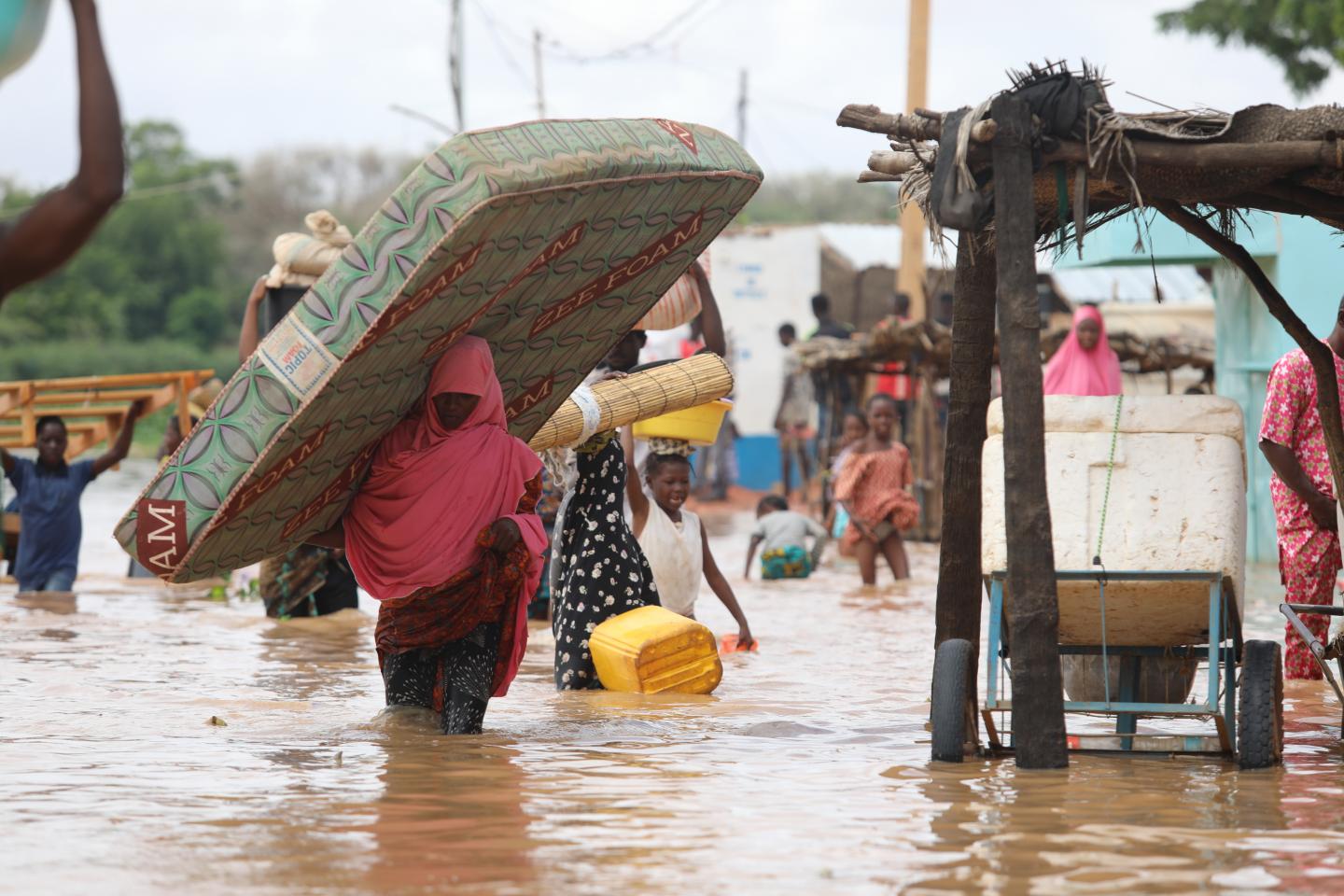
Amid the flood alert issued by the Nigerian Meteorological Agency, NiMet, and the National Emergency Management Agency, NEMA, at least, 191 people have lost their lives, 94 missing, and over 134,000 persons have been affected by floods across 20 states in the country, NEMA has said.
NEMA in its latest Flood Impact Dashboard also disclosed that 239 persons sustained injuries, 48,056 have been displaced, and 9,499 homes have been damaged by floodwaters across 47 Local Government Areas, LGAs, nationwide.
According to the report “Out of the total affected, 60,071 are children, 41,539 are women, 27,121 are men, 5,704 are elderly persons, and 1,874 are persons with disabilities”.
Besides, it pointed out that 9,450 farmlands have also been destroyed, with children and women accounting for the majority of those impacted.
NEMA listed states with the highest flood-affected populations as follow:
Imo – 28,030 persons
Rivers – 22,345 persons
Adamawa – 12,613 persons
Abia – 11,907 persons
Borno – 8,164 persons
Kaduna – 7,334 persons
Others include: Abia, Adamawa, Akwa Ibom, Anambra, Bayelsa, Borno, Delta, Edo, FCT, Gombe, Imo, Jigawa, Kaduna, Kano, Kogi, Kwara, Niger, Ondo, Rivers, and Sokoto.
In the aftermath of the floods
affected communities are in urgent need of food, shelter, nutrition, water, sanitation and hygiene, healthcare, education, protection, among others.
It would be recalled that in 2024 flooding affected 5 million people, displaced 1.2 million, and killed over 1,000.
Meanwhile, Kogi, Nasarawa, and Niger States have rolled out proactive measures to mitigate the effects of flooding, following alerts issued by NiMet and NEMA.
In this vein, the Kogi Government has said it was taking every precaution to prevent loss of lives and property during this year’s rainy season.
Executive Secretary of the Kogi Emergency Management Agency, SEMA, Mr Muktar Atimah, told the News Agency of Nigeria, NAN, yesterday that the state had developed a comprehensive flood preparedness plan.
According to Atimah, the measures include collaboration between SEMA and NEMA to enhance staff capacity through workshops and seminars, the establishment of an emergency response framework, and the setting up of departments for search and rescue, Information Communication Technology, ICT, disaster risk reduction, and logistics coordination.
“We have also launched community sensitisation campaigns involving traditional rulers, religious and community leaders, as well as youth and women groups”, he said.
Atimah, also said that the agency had embarked on media campaign in Hausa and three other indigenous languages on the need to clear drainage.
“We have also created a temporary warehouse for stockpiling relief materials, and partnered with NGOs like the Red Cross, UN-International Organisation for Migration, IOM, and African Network for Environment and Economic Justice, ANEEJ, amongst others.
He said the agency was engaging with Nigeria Inland Waterways, NIWA, to promote waterway safety.
He added that post-flood rehabilitation plans were underway to empower displaced persons after the rainy season.
For his part, Head of NEMA’s Abuja Operations Office, Mr Zakari Abubakar, affirmed the agency’s collaboration with the Kogi government on proactive disaster management.
Abubakar, noted that in July, NEMA assessed flood damage in Lokoja and Kabba and was working to facilitate the release of relief materials.
“Plans are ongoing to establish emergency operation centres across all 21 local government areas to ensure efficient and transparent distribution of palliatives”, he said.
Acting Secretary of the Nigerian Red Cross Society, NRCS, in Kogi State, Mr Abdullahi Abubakar, revealed that the European Humanitarian Aid, EHA, and EU were partnering with the NRCS to provide integrated flood response interventions through the IFRC and Red Crescent Societies.
He urged residents in flood-prone areas to heed early warnings and relocate to safer grounds. “The flood will come, as predicted by NiMet, and prevention is always better than cure”, he warned.
In Nasarawa, residents of flood-prone communities in Awe, Doma, Nasarawa, and Toto LGAs have started relocating from high-risk areas.
Director General of the Nasarawa State Emergency Management Agency, NASEMA, Mr Benjamin Akwash, confirmed this to NAN in Lafia, saying the move was as a result of the agency’s intensive early warning sensitisation campaign.
He said the campaign reached riverine communities such as Tunga , Awe; Loko ,Nasarawa; Umaisha ,Toto; and Doma town, and involved palace visits, local radio messages, and collaboration with disaster-response Ministries Departments and Agencies.
“Upon assuming office, I made flood prevention and mitigation my top priority, and our efforts are yielding results”, Akwash said.
He commended residents who have relocated and urged others yet to do so.
He also revealed collaboration with local government councils to identify safe corridors and highlands for potential relocation.
Akwash said the state government had activated emergency kits including speed boats, canoes, and rain gear, and was working closely with disaster-line MDAs for efficient search and rescue operations if needed.
In Niger State, both NSEMA and NEMA have intensified flood preparedness efforts.
Executive Secretary of NSEMA, Mr Ibrahim Hussaini, said the agency has held stakeholder engagements and sensitisation visits to traditional institutions and town hall meetings.
“Currently, we are running continuous public enlightenment campaigns across the state, and the agency is also monitoring flood-prone areas and identifying high grounds for emergency relocation”, he said.
Hussaini, noted that although only flash flooding had been reported so far, rising water levels and increasing rainfall were being closely watched.
He said the agency was working with the State Ministry of Humanitarian Affairs and the IDPs Agency, to manage potential displacement and camp operations.
Similarly, Malam Hussaini Isah, NEMA’s Head of Operations for Niger and Kwara States, emphasised the importance of translating flood preparedness messages into local dialects.
He underscored the need for
early warning systems,
evacuation to higher ground, and
provision of shelter and relief items.
He also mentioned that NEMA was advising farmers on improved seeds and optimal planting and harvesting times to minimise agricultural losses.
Isah confirmed that relief materials were being stockpiled, and safe locations for possible IDP camps were being identified in anticipation of displacement.
“By taking proactive measures, we can strengthen community resilience and minimise the impact of flooding”, he said.
As rainfall continues across Nigeria, NEMA has called for increased intergovernmental coordination and faster deployment of relief to avert further loss of life.