
By Dickson Pat
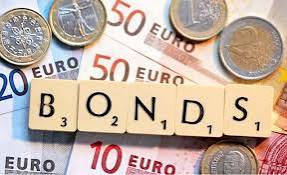
Nigeria’s Eurobond worth $1.12 billion will mature in November, and analysts said they expect the government to step up foreign borrowing in the latter part of the year to meet the obligation.
Several analysts express views that the federal government is expected to make fresh foreign loan calls to meet internal needs and settle Eurobond maturity amidst a rising debt profile.
In the first half, the government focused on the local debt capital market to meet its borrowing requirement towards financing budget deficit for 2025.
Debt papers sales appear to have tempered year-to-date as the authority slowed down borrowing via fixed interest securities assets; however, Sukuk and green bonds were introduced into the borrowing equation for the period.
The Debt Management Office offered a total of N750 billion at the bond auctions for the quarter across the April 2029, June 2032, and May 2033. The authority, however, raised N798.6 billion was sold through the quarter as against N1.54 trillion subscription.
Nigeria’s public debt increased by 3.26% quarter-on-quarter to N149.39 trillion as at the end of March 2025, according to the Debt Office’s latest update on total public debt.
Year-on-year, Nigeria’s debt burden expanded by 22.78% to N149.39 trillion, underscoring continued fiscal reliance on debt to plug budgetary gaps amid tepid revenue growth and elevated expenditure pressures.
Public debt is expected to expand in 2025 to 54% of gross domestic product, Cordros Capital Limited projected in its mid-year macro report, anchored on persistent borrowing, which is expected to cut across local and foreign markets.
Analysts at CardinalStone Partners said in a mid-year report that the government issued about N3.00 trillion through Nigerian Treasury bills and bonds in the first half of the year.
Analysts said the amount suggests that a further net issuance of N10.08 trillion may be required to cover the government’s estimated deficit for 2025.
“Nigeria mostly relied on the domestic market for deficit financing in the first half, but we expect a notable increase in external sourcing in the second half of 2025”, the firm said in its update.
CardinalStone disclosed that the Nigerian government plans to raise $1.20 billion through the DMO and a further $2.00 billion at concessionary rates through multilateral sources.
“These numbers suggest that a cumulative total of N4.90 trillion—using the official exchange rate of $1,530.00/$ as at June 1, 2025—may be sourced from abroad”.
The investment firm said in its update that the balance of N5.19 trillion will likely be raised from the domestic market after catering to rollovers.
“We are of the view that a part of the external borrowings may be used to finance the $1.12 billion Eurobond maturity due in November and cumulative coupons of about $1.38 billion”.
In the course of the year, President Bola Tinubu requested National Assembly’s approval for $21.00 billion, €2.20 billion, and ¥15.00 billion for project financing in relation to the country’s medium-term expenditure framework
Commenting on the issue, analysts at CardinalStone said the development suggests that foreign borrowings will remain critical to Nigeria’s deficit financing in the medium term.