…As Nigeria targets 100,000bpd oil output from OML 83, 85
By Charles Ebi
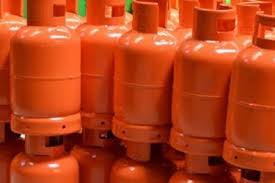
Average price of Liquefied Petroleum Gas (Cooking Gas) rose by 3.32% month-on-month, increasing from N6,699.63 recorded in September 2024 to N6,915.69 in October 2024.
This is according to the latest Cooking Gas Price Watch report from the National Bureau of Statistics ,NBS, as seen by AljazirahNigeria
On a year-on-year basis, the price of cooking gas rose significantly by 51.58%, from N4,562.51 in October 2023 to N6,915.69 in October 2024.
The data also Indicates that the northeast region recorded the highest average price, making residents in that region pay the most for cooking gas.
According to the report, the average price of a 5kg cylinder of LPG in the North-East stood at N7,319.03.
Conversely, the north-west region had the lowest average price at N6,703.95, which is below the national average price.
The report further provided a state-by-state breakdown for October 2024.
Borno recorded the highest average price for refilling a 5kg cylinder of cooking gas at N7,939.29, followed by Yobe at N7,580.00 and Benue at N7,578.00.
On the other hand, Katsina recorded the lowest average price at N6,270.00, followed by Zamfara at N6,410.71 and Delta at N6,427.78.
The data also revealed that the average retail price for refilling a 12.5kg cylinder of LPG increased by 2.58% month-on-month, rising from N16,313.43 in September 2024 to N16,734.55 in October 2024.
On a year-on-year basis, the price increased by 58.68% from N10,545.87 in October 2023.
In terms of state-by-state analysis, Rivers recorded the highest average price for refilling a 12.5kg cylinder at N17,895.00, followed by Osun at N17,739.06 and Benue at N17,731.25.
However, Katsina recorded the lowest price at N14,725.00, followed by Nasarawa at N15,390.55 and Adamawa at N15,474.21.
The zonal analysis showed that the south-south region recorded the highest average price for refilling a 12.5kg cylinder at N17,114.67, followed by the south-east at N16,9061.
Meanwhile, the north-central region had the lowest average price at N16,411.19.
The monthly rise in 5kg cooking gas prices adds a compounded burden to households already grappling with strained budgets due to inflationary pressures driven by higher food and transport costs.
This persistent increase over the past 12 months may push vulnerable individuals and households to switch from gas to firewood or other polluting energy sources for cooking and household activities.
Such a trend would hinder ongoing efforts to eliminate the use of firewood and coal for cooking in Nigeria.
Meanwhile, the Nigerian National Petroleum Company ,NNPC, Limited-First Exploration & Production ,E&P, Joint Venture, operating the Abigail Joseph Floating Production Storage and Offloading ,FPSO, facility on Oil Mining License ,OML, 83/85 offshore Bayelsa, has announced a target of 100,000 barrels per day of crude oil production by 2025.
The Minister of State for Petroleum Resources (Oil), Mr Heineken Lokpobiri, while speaking during a recent inspection of the facility, disclosed that the facility currently produces 60,000 barrels per day.
He praised the ongoing drilling campaign led by First E&P, which aims to add 23 new oil wells to the country’s production base.
“This is a clear example of how collaboration between NNPCL and indigenous companies can drive growth in Nigeria’s energy sector. The ongoing reforms are unlocking opportunities that will enhance our national oil production and contribute to our economic development,” the Minister stated.
While celebrating the progress of the JV, the minister acknowledged the important role of reforms in the sector.
“These productive outputs are a direct result of the ongoing reforms in Nigeria’s oil sector. They are unlocking significant opportunities for growth. I encourage other indigenous companies to leverage these opportunities and replicate this success,” he added.
Mr Lokpobiri also emphasized the importance of indigenous companies playing a central role in the country’s energy future.
“Together, we can contribute to the continued growth of Nigeria’s oil industry and further enhance national productivity,” he said, underscoring the strategic importance of local participation in the sector.