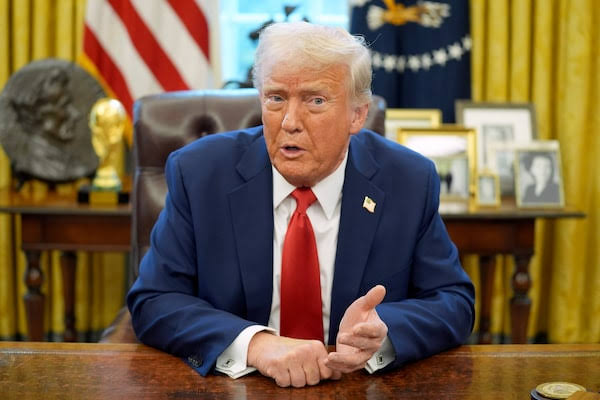
United States President Donald Trump has expressed optimism that a peace agreement between Iran and Israel could be reached within days, saying negotiations are in their “final throes” after both sides stepped back from a fresh round of hostilities that threatened an already fragile ceasefire.
Speaking to reporters after returning from an NBA Finals game, Trump said both countries had agreed to halt further attacks following a recent exchange of missile strikes and retaliatory operations.
“Iran and Israel were going back and forth and now they both agreed through me to stop and we’re in the final throes of what will be a very, very good deal,” Trump said.
When asked about the timeline for a possible agreement, the US president expressed confidence that progress could come quickly.
“It will take two or three days,” he added.
Ceasefire Faces New Challenges
Despite a ceasefire that has largely held since April, tensions resurfaced after Iran launched missiles toward Israel on Sunday, citing ongoing Israeli military operations in Lebanon against the Iran-backed group Hezbollah.
The missile attack prompted retaliatory Israeli strikes, although Washington reportedly pressed both sides to exercise restraint.
Iran later announced it was suspending military action, while Israeli Prime Minister Benjamin Netanyahu stated that “the fire on that front is contained.”
However, both governments maintained firm positions.
Tehran warned that it would resume attacks if Israel continued military operations in Lebanon, while Netanyahu said Israel would respond forcefully to any future aggression.
“Should Iran make the mistake of resuming attacks against us, we will respond with full force,” Netanyahu said.
Meanwhile, Israeli Defence Minister Israel Katz insisted that military operations against Hezbollah in Lebanon would continue and warned that Israel would retaliate against future attacks from the group.
Trump Pressures Netanyahu
Reports indicate that Trump personally intervened to prevent a wider military escalation.
According to media reports, Israel had been preparing a significant wave of strikes against Iran before Trump contacted Netanyahu directly.
“I said, ‘Bibi, you better be careful, or you will be on your own very soon,’” Trump reportedly told journalists.
The US president has increasingly emphasized diplomacy, urging both countries to avoid actions that could derail ongoing negotiations.
Earlier, Trump said that final peace talks would move forward provided that “ignorance or stupidity” did not interfere with the process.
However, Netanyahu reiterated Israel’s right to defend itself.
“Israel has a full right to self-defence, and we are exercising it as required,” he said in a televised address.
US Vice President JD Vance also acknowledged that while the United States and Israel share many strategic interests, their positions do not always completely align.
Violence Continues in Lebanon
Although no casualties were reported following the latest exchange of strikes between Iran and Israel, violence persisted in Lebanon.
Lebanese authorities reported that Israeli airstrikes killed at least 14 people in southern Lebanon on Monday.
The Israeli military said attacks were carried out after projectiles were launched toward its troops operating in the area. It also reported intercepting a suspected aerial threat originating from Yemen.
The continued fighting in Lebanon remains one of the major obstacles to a comprehensive regional peace agreement, as Tehran has repeatedly insisted that any settlement must address the conflict involving Hezbollah.
Diplomatic Efforts Continue
Despite the tensions, diplomatic channels remain open.
Iranian President Masoud Pezehskian reaffirmed that Tehran remains committed to negotiations, posting on social media that Iran is still “at the negotiating table.”
Pakistan has also continued its mediation efforts. Interior Minister Mohsin Naqvi recently visited Tehran to deliver messages from Pakistan’s leadership to Iran’s Supreme Leader, Mojtaba Khamenei, as part of efforts to facilitate dialogue.
Meanwhile, Iran’s international airport in Tehran has reportedly resumed operations after temporary disruptions caused by recent hostilities, while global oil markets have shown signs of stabilization after an earlier spike in prices linked to concerns about regional security and shipping routes.